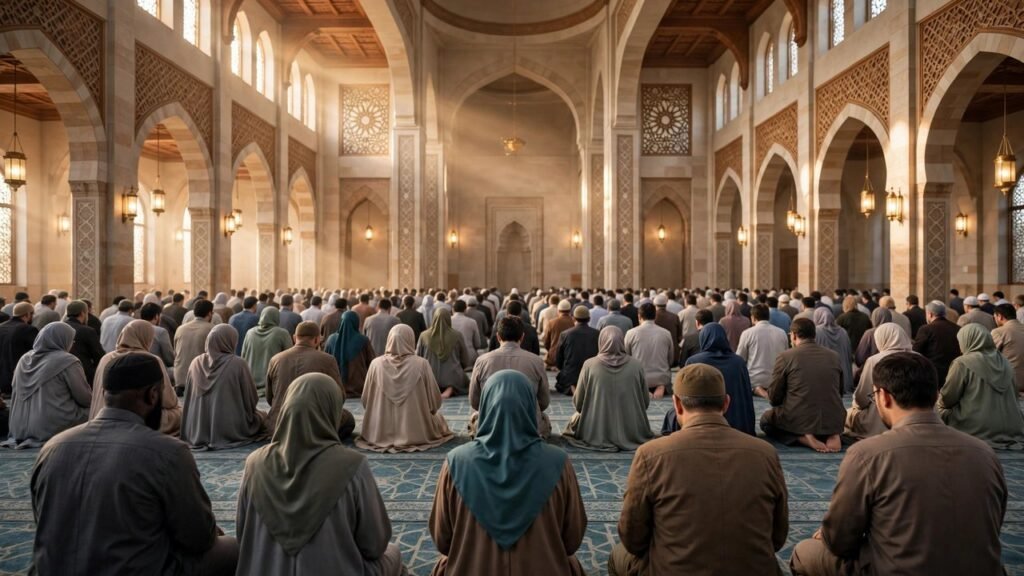
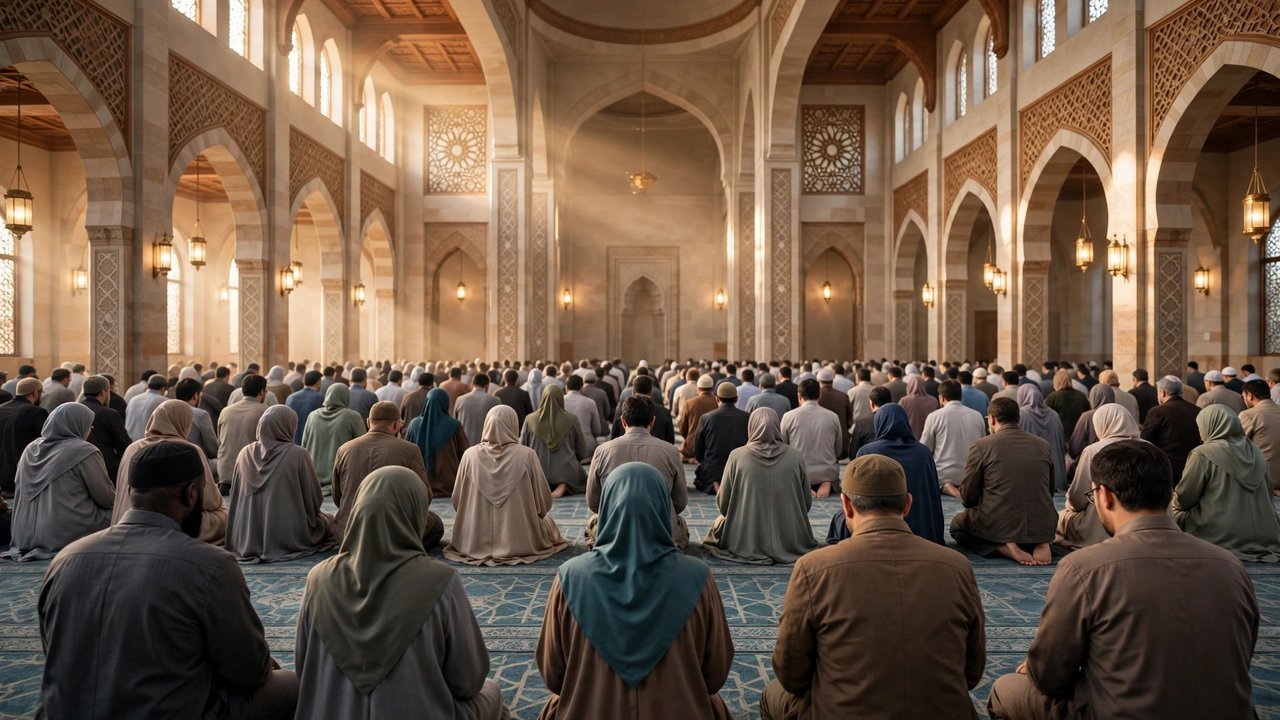
Ummah means the worldwide community of Muslims. It is every person who believes in Allah and in the prophethood of Muhammad (peace be upon him), in every country, speaking every language, bound by one faith instead of one flag. If you are new to Islam, a parent raising Muslim children, or a Muslim living far from any masjid, this guide gives you the clear meaning, the 4 verses that define it, and 7 ways you can start this week.
What Does Ummah Mean in Arabic? 3 Facts in 1 Word
Ummah (أُمَّة) comes from the Arabic root a-m-m, the same root as umm (أم), the word for mother. That link is the whole definition in miniature: an ummah is a group that shares one origin, one reference point, and one way of life.
Three facts make the meaning clear. First, the word appears 62 times in the Quran, in singular and plural forms, and it does not always mean the Muslim community. It is also used for earlier peoples and for communities of animals (Quran 6:38). Second, Arabic already had other words for a group of people. Qawm meant a tribe bound by blood and lineage. Sha’b meant a people bound by shared ancestry or land. Ummah meant something else: a group bound by shared belief and shared purpose. Third, in everyday use today, “the ummah” almost always means the worldwide community of Muslims. That is the sense used in the rest of this article.
The difference matters in daily life. A nation asks for a passport. A tribe asks for a bloodline. The ummah asks for belief.
Who Belongs to the Ummah? 2 Circles and 3 First Steps
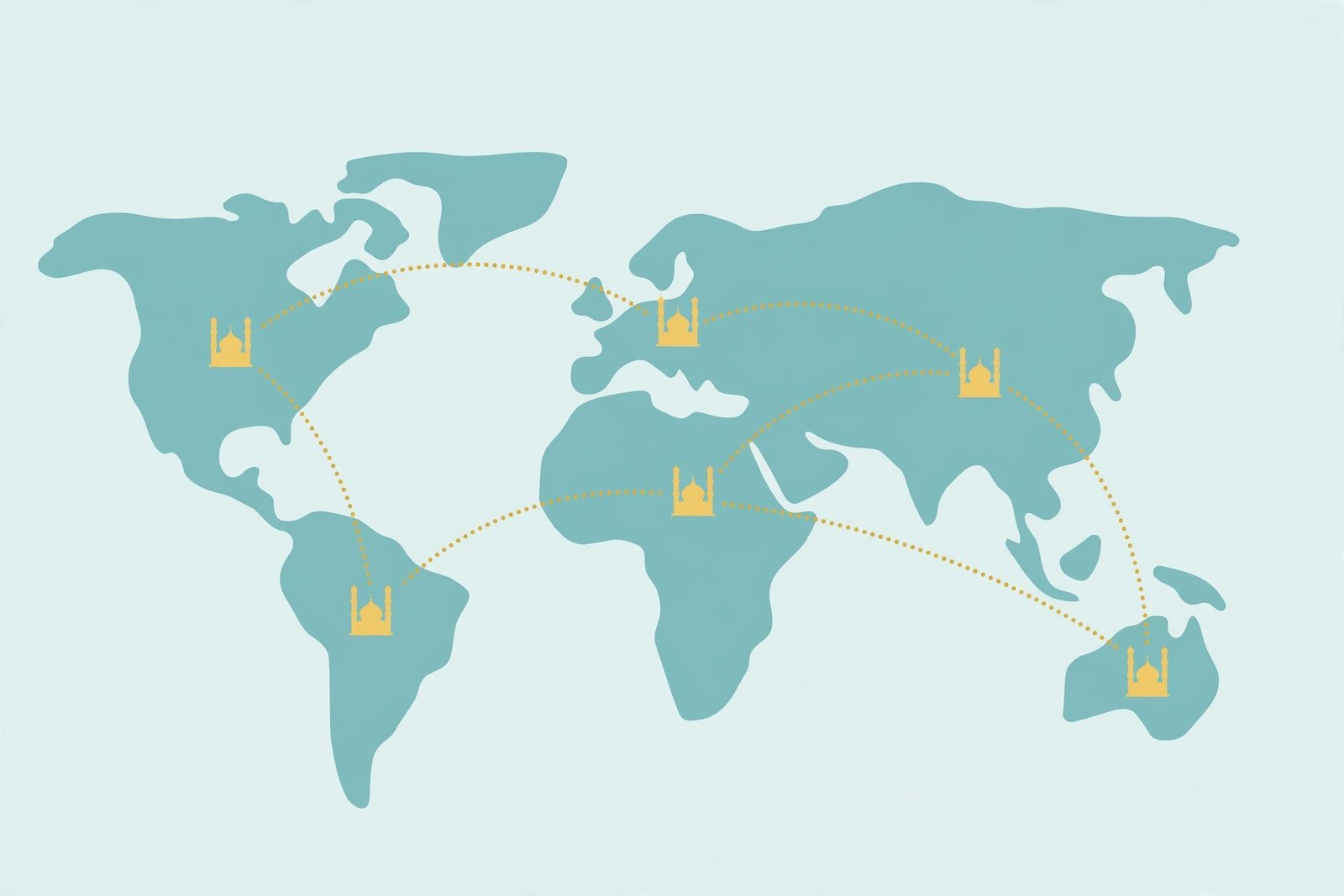
The short answer is that every Muslim belongs to the ummah. The Quran draws that circle in two ways. The inner circle is the ummah of response: people who accepted the message of Islam and entered the faith. The outer circle is the ummah of dawah: all of humanity, to whom the Prophet Muhammad (peace be upon him) was sent as a messenger.
The Prophet Ibrahim (peace be upon him) prayed for the inner circle long before it existed: “Our Lord! Make us both fully submit to You and from our descendants a nation that will submit to You.” (Quran 2:128) The shahada is the doorway into that circle.
| Circle | Who is in it | What it means for you |
|---|---|---|
| Ummah of response | Every Muslim, about 2 billion people | You belong from the moment you declare the shahada |
| Ummah of dawah | All of humanity | The message of Islam was sent to everyone |
Your first step depends on where you are starting. Take the branch that fits you.
Branch 1: You are new to Islam. Start by learning to read the Quran, even a little at a time. The Noorani Qaida course teaches the Arabic letters and joining rules first. Most learners need 3 to 6 months at 3 classes a week before they can read short surahs.
Branch 2: You are a parent. Start at home. Teach your child the greeting, the 5 daily prayers, and the idea that Muslims everywhere are one family.
Branch 3: You live far from a Muslim community. Start online. Live 1-on-1 Quran classes give you a teacher and a fixed weekly time, even when the nearest mosque is hours away.
What Does the Quran Say About the Ummah? 4 Verses That Define It
Four verses give the full picture: one sets the mission, one sets the balance, one sets the unity, and one sets the bond.
1. The mission — Quran 3:110. “You are the best community ever raised for humanity–you encourage good, forbid evil, and believe in Allah.” (Quran 3:110) Three conditions carry the praise: encouraging good, forbidding evil, and belief in Allah.
2. The balance — Quran 2:143. “And so We have made you believers an upright community so that you may be witnesses over humanity and that the Messenger may be a witness over you.” (Quran 2:143) The word translated as “upright” is wasat, which also means middle.
3. The unity — Quran 21:92. “Indeed, this religion of yours is only one, and I am your Lord, so worship Me alone.” (Quran 21:92) The verse speaks to all the prophets at once and calls their communities one ummah.
4. The bond — Quran 3:103. “And hold firmly together to the rope of Allah and do not be divided. Remember Allah’s favour upon you when you were enemies, then He united your hearts, so you–by His grace–became brothers.” (Quran 3:103) Unity is not a side benefit of the ummah. It is a command.
The Prophet (peace be upon him) described the same bond in a hadith every Muslim should know: “You see the believers as regards their being merciful among themselves and showing love among themselves and being kind, resembling one body, so that, if any part of the body is not well then the whole body shares the sleeplessness and fever with it.” (Sahih al-Bukhari 6011)
How Is the Ummah Different From a Nation? 3 Clear Differences
A nation and an ummah look similar from a distance, and the 3 differences below keep them apart.
| A nation | The ummah | |
|---|---|---|
| What binds it | Shared land, language, or history | Shared belief in Allah and His Messenger |
| Where it ends | At a border, checked by a passport | Nowhere; it covers every continent |
| How you join | By birth or by citizenship | By faith, through the shahada |
The first difference is the deepest. A nation can include people of many faiths and no faith. The ummah includes people of many nations and no single nation. No government issues ummah membership, and no government can take it away.
History gives one early example. In 622 CE, the Prophet Muhammad (peace be upon him) drew up an agreement in Medina, often called the Constitution of Medina, which described the people of Medina as one ummah.
How Do Sunni and Shia Muslims View the Ummah? 1 Shared Belief, 2 Views on Leadership
Both Sunni and Shia Muslims affirm one ummah. That is the fact to hold first. Both groups share the same Quran, the same 5 daily prayers, the same direction of prayer toward Makkah, the same month of Ramadan, and the same Hajj.
The difference between the two is about leadership after the Prophet (peace be upon him), not about the ummah itself. Sunni Muslims hold that the community chose its leaders after the Prophet, beginning with Abu Bakr (may Allah be pleased with him). Shia Muslims hold that leadership belonged to Ali (may Allah be pleased with him) and his descendants by divine appointment. That disagreement is real and more than 1,300 years old.
Three points help a beginner keep the subject in proportion. First, the disagreement is about who should have led, not about whether the ummah is one. Second, both traditions teach the same duties that hold the ummah together: prayer, charity, and kindness to fellow Muslims. Third, the Quran’s call to hold together (Quran 3:103) is addressed to all of them. If you want to learn more, ask a qualified teacher.
What Does Belonging to the Ummah Mean in Daily Life? 7 Steps for Your First Week
Belonging to the ummah is not a feeling you wait for. It is 7 small actions, repeated until they become habits. Assume a new Muslim, 34 years old, living in a city with no mosque nearby, with 30 minutes a day to give. Here is her first week.
Step 1, Monday: Learn the greeting. Say assalamu alaikum to one Muslim you know, and learn the reply, wa alaikum assalam. The guide on the Muslim greeting gives the exact wording and reply.
Step 2, Tuesday: Pray 1 prayer on time. Pick Fajr or Maghrib and pray it at its time.
Step 3, Wednesday: Read 2 verses of Quran with meaning. Open Surah Al-Fatiha and read the translation in your own language. Two verses a day is 14 a week, and 14 a week is more than 700 a year.
Step 4, Thursday: Give 1 small charity. Give a small amount to a person in need or a trusted charity, even the price of a coffee.
Step 5, Friday: Join 1 congregation, online or in person. Attend Jumu’ah at a mosque if one is near, or join a live class. Friday prayer is the weekly moment the ummah gathers.
Step 6, Saturday: Make dua for 3 Muslims you will never meet. Name a country, a group, or a situation, and ask Allah to help them.
Step 7, Sunday: Call or message 1 Muslim friend or family member. Ask how their week went.
By Sunday evening, this new Muslim has greeted, prayed, read, given, gathered, prayed for others, and reached out. Seven days, 30 minutes a day.
How Does Learning the Quran Connect You to the Ummah? 4 Courses and 1 Cost Table
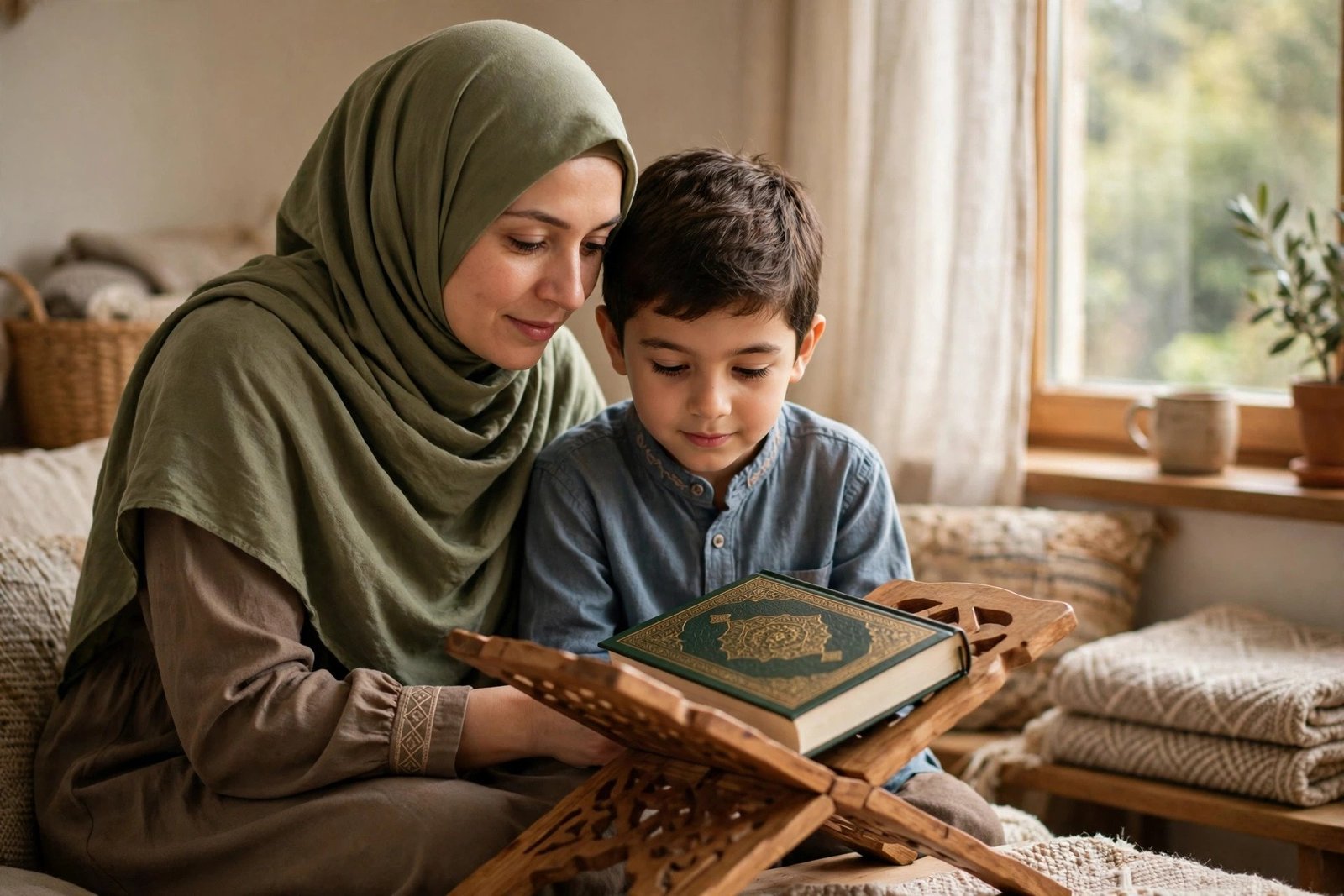
Learning to read the Quran is the surest way to feel part of the ummah, because the Quran is the one book every Muslim shares. A Muslim who can read it can pray with any congregation on earth and teach the same words to their children. The 4 courses below are the path, in order.
| Course | Who it is for | What it gives you |
|---|---|---|
| Noorani Qaida | Cannot read Arabic letters yet | The alphabet, joining rules, and short surahs |
| Quran Reading | Knows the letters but reads slowly | Fluent reading, verse by verse |
| Quran with Tajweed | Wants correct pronunciation | The rules that keep every letter sounding right |
| Islamic Studies for Kids / Quran Classes for Adults | Children, or adults starting from scratch | Beliefs, worship, and daily practice |
The decision is simple. If you cannot read the Arabic letters yet, start with Noorani Qaida. I you can read but stumble, start with Quran Reading. If you read but mispronounce, start with Tajweed.
Classes are live 1-on-1 online with certified male and female teachers. Every plan starts with a free trial class, no card required. The monthly fee is $43 to $100.
| Classes per month | Cost per class at $43/month | Cost per class at $100/month |
|---|---|---|
| 8 classes (2 a week) | $5.38 | $12.50 |
| 12 classes (3 a week) | $3.58 | $8.33 |
| 20 classes (5 a week) | $2.15 | $5.00 |
Three classes a week is the middle of the road, and at that pace a beginner needs about 30 minutes a day.
What Are 5 Mistakes That Weaken Your Sense of Ummah?
These 5 mistakes are common, and each one has a fix that takes less than a week.
Mistake 1: Waiting to feel ready before you join in. New Muslims often wait until they can read Arabic or pray well before they visit a mosque or join a class. The fix is to join now, at your real level.
Mistake 2: Learning alone with no teacher and no class. Apps and videos can teach letters, but they cannot correct your pronunciation or notice when you stop practising. The fix is one live class a week at minimum.
Mistake 3: Treating the ummah as a political idea only. Some people talk about the ummah for hours and never greet a neighbour, visit a sick Muslim, or give charity. The fix is the 7-step week above.
Mistake 4: Letting one disagreement cut you off from other Muslims. Differences in schools of thought are real, and the Sunni and Shia traditions have differed for centuries. The fix is to keep the shared ground in view: one Quran, one direction of prayer, one month of fasting.
Mistake 5: Raising children with no Muslim friends. A child who only meets Muslims at Eid will find the ummah strange. The fix is one regular contact: a weekly class with a teacher, a Quran circle, or a family you visit each month. If you teach at home, the guide on Islamic education at home gives a plan.
Your 7-Day Ummah Checklist
Print this list or copy it into your phone. Tick each box as you finish it, and start again on Monday.
- [ ] Day 1: Say salaam to 1 Muslim and learn the reply
- [ ] Day 2: Pray 1 prayer on time
- [ ] Day 3: Read 2 verses of Quran with their meaning
- [ ] Day 4: Give 1 small charity
- [ ] Day 5: Join 1 congregation, online or in person
- [ ] Day 6: Make dua for 3 Muslims you will never meet
- [ ] Day 7: Call or message 1 Muslim friend or family member
One week of boxes ticked is the start. Four weeks of boxes ticked is a habit.
Frequently Asked Questions
Is the ummah only for Muslims?
Yes, in its everyday sense. The ummah of response is every Muslim, and the Quran’s description of it in 3:110 is addressed to believers. Scholars also use a wider sense, the ummah of dawah, for all of humanity.
How many people are in the ummah today?
Nearly 2 billion Muslims worldwide, in more than 50 majority-Muslim countries and in large communities across Europe, North America, and Asia.
What is the difference between ummah and umrah?
Ummah means community. Umrah is the lesser pilgrimage to Makkah, which Muslims can perform at any time of year. The two words sound alike and mean very different things.
Can a new Muslim join the ummah right away?
Yes. Membership starts with the shahada, the declaration of faith. There is no waiting period, no test, and no membership form.
What is the ummah of dawah?
It is the wider circle: all of humanity, to whom the Prophet Muhammad (peace be upon him) was sent.
Does the ummah have one leader today?
No. There is no single political leader of all Muslims today. The ummah is united by shared belief, shared scripture, and shared worship, not by one government or one office.
Start Learning the Quran With a Free Trial Class
The ummah is one book, one prayer, and one community. Reading the Quran is how you take your place in it, and a live teacher is the surest way to start. Book a free trial class today, no card required. A certified male or female teacher will meet you or your child at your real starting point.