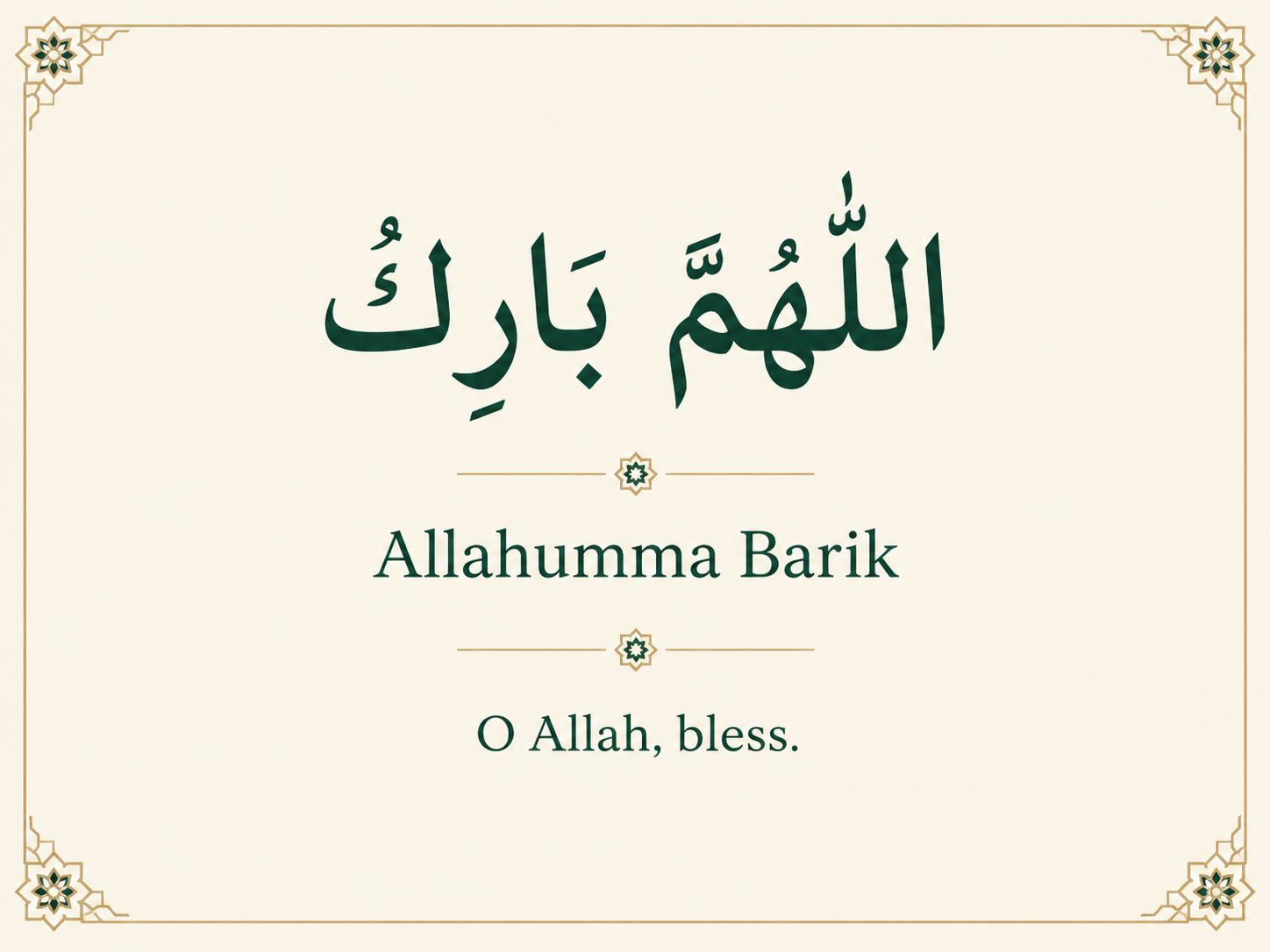
Allahumma Barik (اللَّهُمَّ بَارِكْ) means “O Allah, bless.” It is an Arabic dua, or supplication, in which a Muslim asks Allah to grant blessing and goodness to a person, possession, or situation. Muslims commonly use it when admiring something good, such as a child’s achievement, a friend’s new home, or another person’s success.
The phrase is often said alongside MashaAllah, although the two expressions have different meanings. Understanding the Arabic wording, pronunciation, and appropriate context can help you use this common Islamic expression more confidently.
What Does Allahumma Barik Mean in English?
The direct English translation of Allahumma Barik is “O Allah, bless.” Depending on the context, the intended meaning may be expressed as “O Allah, bless him,” “O Allah, bless her,” or “O Allah, bless them.”
The phrase contains two main parts:
- Allahumma (اللَّهُمَّ): O Allah. This is a form of direct address used when supplicating to Allah.
- Barik (بَارِكْ): Bless. It is a request for Allah to grant blessing.
Together, the words form a short supplication asking Allah to place barakah in something.
What does barakah mean?
Barakah (بَرَكَة) is commonly translated as blessing. In Islamic usage, it can convey lasting goodness, benefit, and increase granted by Allah.
For example, asking Allah to bless someone’s home is not simply wishing that the building becomes more valuable. It expresses a prayer that the home brings goodness, peace, and benefit to its occupants.
Likewise, asking for blessing in someone’s knowledge or work expresses a wish for that knowledge or effort to bring lasting benefit.
The exact nuance depends on the context, but the central idea remains a request for Allah’s blessing.
Allahumma Barik in Arabic and How to Pronounce It
The phrase is written in Arabic as:
اللَّهُمَّ بَارِكْ
Without vowel marks, it is commonly written as:
اللهم بارك
Transliteration: Allahumma Barik
Simple pronunciation: al-LAA-hum-ma BAA-rik.
To practise the pronunciation:
- Say Allahumma slowly, keeping the doubled sounds clear.
- Pronounce Barik with a long “aa” sound.
- Join the words smoothly: Allahumma Barik.
English transliteration can only approximate Arabic pronunciation. Listening to a qualified Arabic teacher or a reliable audio recording is useful if you are learning the phrase for the first time.
When Should You Say Allahumma Barik?
Allahumma Barik is commonly used when asking Allah to bless something that you appreciate. It can turn a compliment into a supplication rather than leaving it as an expression of admiration alone.
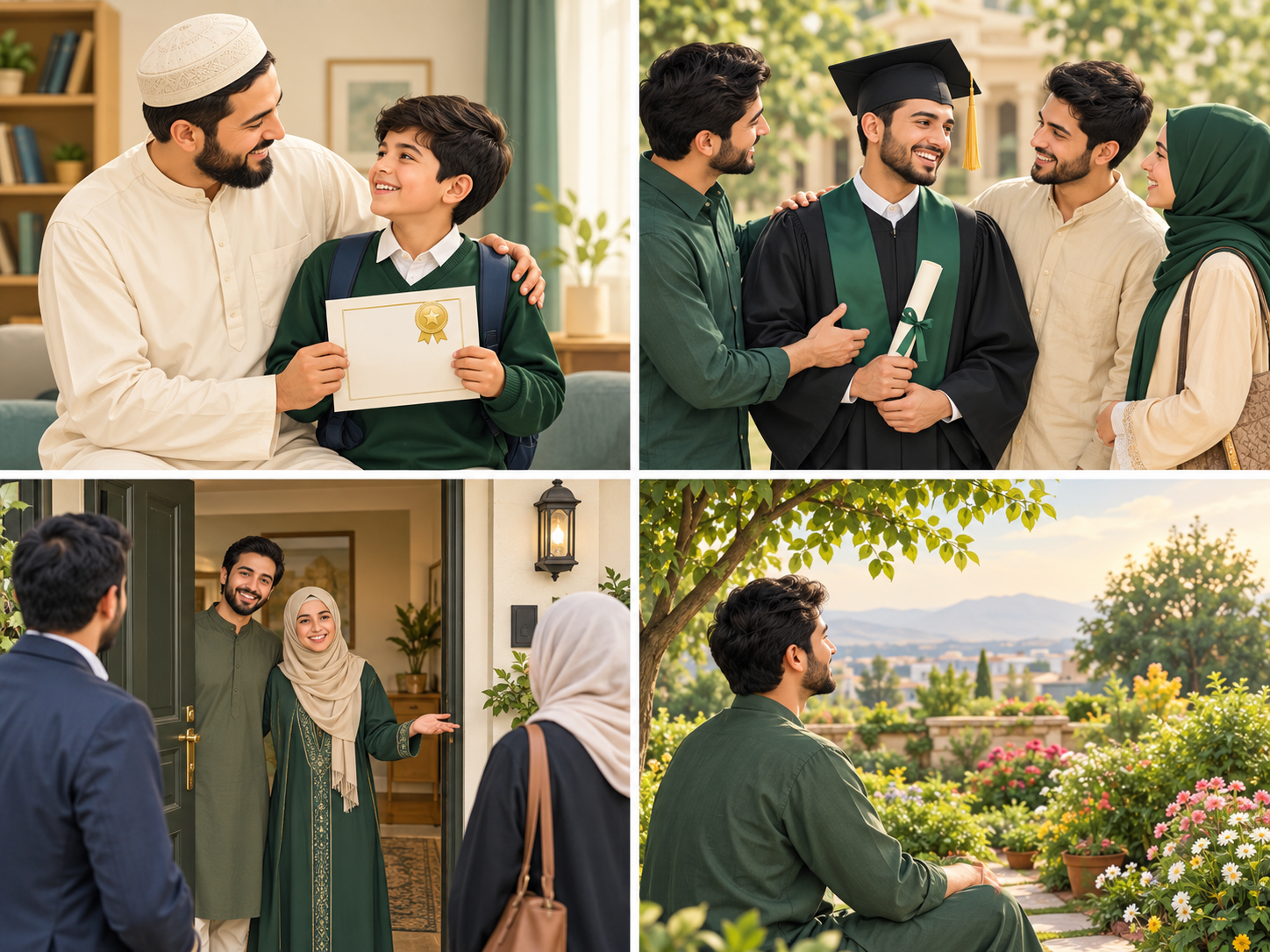
Here are some everyday examples.
1. When admiring someone’s child
You might say:
MashaAllah, Allahumma Barik.
This acknowledges something pleasing and asks Allah to bless the child.
2. When someone buys a new home
You could say:
Allahumma Barik. May Allah bless your home.
The phrase expresses goodwill and asks Allah to grant blessing in the home and the lives of those who live there.
3. When congratulating someone on an achievement
If a friend graduates, succeeds in an examination, or accomplishes something meaningful, you can use the phrase to express your happiness for them and make a dua for continued goodness.
4. When admiring someone’s possessions or opportunities
A beautiful garden, a new car, or a successful business may prompt a person to say Allahumma Barik. The intention is to ask Allah to bless what is admired, not simply to comment on its appearance or value.
These examples describe common usage. They should not be taken to mean that this exact phrase is the only appropriate supplication in every situation.
Is Allahumma Barik related to the evil eye?
Islamic teachings recognise the evil eye, and a well-known narration encourages praying for blessing when seeing something admirable. In the report concerning Sahl ibn Hunayf, the Prophet Muhammad ﷺ instructed that a person should pray for blessing when seeing something they like.
The practical lesson is to respond to another person’s blessing with goodwill and dua rather than envy. However, it is important not to claim that saying one phrase guarantees protection from every form of harm.
For further study, consult the relevant hadith collections and qualified scholars when examining the narration’s wording and grading.
Allahumma Barik Lahu, Laha, and Lahum: What Is the Difference?
The words added after Allahumma Barik can change who is being addressed in the supplication.
| Arabic phrase | Transliteration | Meaning |
|---|---|---|
| اللَّهُمَّ بَارِكْ لَهُ | Allahumma Barik Lahu | O Allah, bless him. |
| اللَّهُمَّ بَارِكْ لَهَا | Allahumma Barik Laha | O Allah, bless her. |
| اللَّهُمَّ بَارِكْ لَهُمَا | Allahumma Barik Lahuma | O Allah, bless the two of them. |
| اللَّهُمَّ بَارِكْ لَهُمْ | Allahumma Barik Lahum | O Allah, bless them. |
| اللَّهُمَّ بَارِكْ لَنَا | Allahumma Barik Lana | O Allah, bless us. |
These variations help you direct the supplication towards the appropriate person or people.
For example, Allahumma Barik Laha is used when asking Allah to bless a woman, while Allahumma Barik Lahum is used for a group in common Arabic usage.
Arabic grammar can involve additional distinctions, including feminine plural forms. The table provides useful common expressions rather than every possible grammatical construction.
Allahumma Barik vs MashaAllah vs TabarakAllah
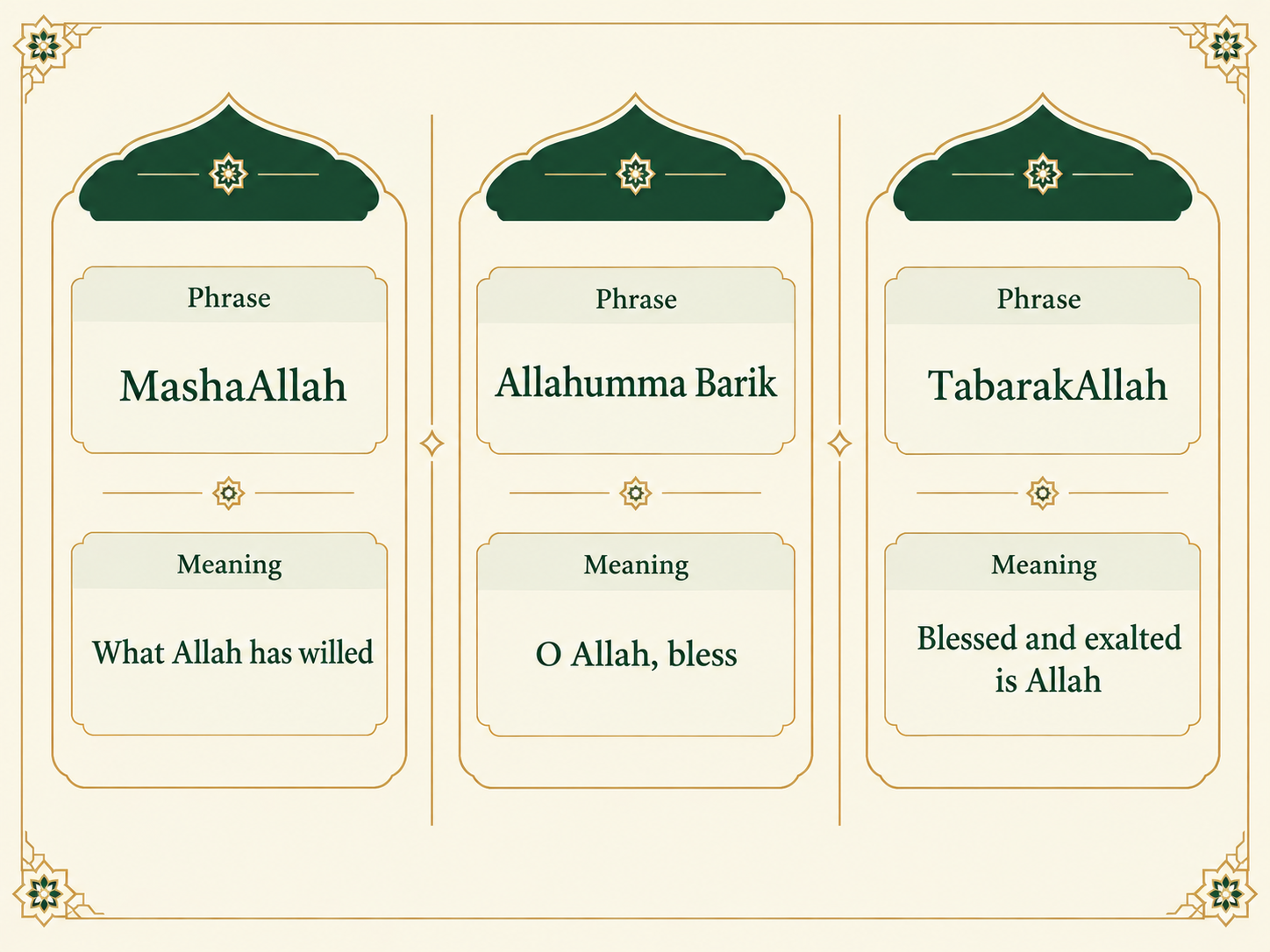
These expressions are related in everyday Muslim conversation, but they do not mean exactly the same thing.
| Phrase | Meaning | Main purpose |
|---|---|---|
| MashaAllah (مَا شَاءَ اللَّهُ) | What Allah has willed | Acknowledges Allah’s will in relation to something. |
| Allahumma Barik (اللَّهُمَّ بَارِكْ) | O Allah, bless | Makes a supplication asking Allah to grant blessing. |
| TabarakAllah (تَبَارَكَ اللَّهُ) | Blessed and exalted is Allah | Expresses praise of Allah. |
Can you say MashaAllah and Allahumma Barik together?
Yes, Muslims commonly say MashaAllah, Allahumma Barik when admiring a blessing.
For example, if you see a friend’s beautiful home, you might say:
MashaAllah, Allahumma Barik. May Allah bless your home.
The first expression acknowledges Allah’s will, while the second asks Allah to grant blessing.
The distinction matters because the phrases perform different functions. One acknowledges; the other asks.
How to Reply to Allahumma Barik
There is no need to feel that you must memorise a single mandatory response for every occasion. A simple, sincere reply is appropriate.
Here are some possible responses:
| Response | Meaning |
|---|---|
| Ameen (آمين) | O Allah, accept the supplication. |
| Wa feeka barakAllah (وَفِيكَ بَارَكَ اللَّهُ) | May Allah bless you too, addressed to a man. |
| Wa feeki barakAllah (وَفِيكِ بَارَكَ اللَّهُ) | May Allah bless you too, addressed to a woman. |
| JazakAllahu khayran (جَزَاكَ اللَّهُ خَيْرًا) | May Allah reward you with goodness. |
These are possible conversational responses, not a list of obligatory replies specifically prescribed for every occasion.
For example:
Person A: MashaAllah, Allahumma Barik!
Person B: Ameen, wa feeka barakAllah.
This is a natural way to acknowledge the dua and return a prayer for blessing.
Is Allahumma Barik Mentioned in the Quran or Hadith?
It is important to distinguish between the exact short phrase, related supplications, and Quranic expressions about blessings.

What does the Quran teach about blessings?
In Surah Al-Kahf 18:39, the Quran describes a believer reminding his companion to acknowledge Allah when entering his garden, saying:
MashaAllah, la quwwata illa billah.
The verse teaches the importance of recognising Allah in relation to one’s blessings. It is relevant to the broader subject of expressing gratitude and remembering Allah, but it should not be presented as an exact occurrence of the phrase Allahumma Barik.
You can read the verse in the Quranic Arabic Corpus translation of Surah Al-Kahf 18:39.
What do hadith teach about praying for blessing?
A narration concerning Sahl ibn Hunayf reports that the Prophet Muhammad ﷺ instructed people to pray for blessing when they see something they admire. This provides important context for the practice of making a dua for blessing.
There are also established narrations about supplicating for newlyweds. For example, the marriage supplication reported in Sunan Abi Dawud 2130 asks Allah to bless the couple and bring them together in goodness.
The full wording is:
BarakAllahu laka, wa baraka alayka, wa jama’a baynakuma fi khayr.
Its meaning is approximately: “May Allah bless you, bestow blessings upon you, and bring you together in goodness.”
Read the narration in Sunan Abi Dawud 2130.
These sources help readers understand the broader Islamic practice of praying for blessing. For specific claims about a hadith’s authenticity or a phrase’s prescribed use, consult the original narration and qualified scholarly commentary rather than relying on unsourced online summaries.
Frequently Asked Questions
What does Allahumma Barik mean in simple English?
It means “O Allah, bless.” It is a supplication asking Allah to grant blessing and goodness.
How do you write Allahumma Barik in Arabic?
It is written as اللَّهُمَّ بَارِكْ with vowel marks, or اللهم بارك without them.
Is Allahumma Barik a dua?
Yes. It is a supplication asking Allah to bless a person, thing, or situation.
Can you say Allahumma Barik to a woman?
Yes. A common form is Allahumma Barik Laha (اللَّهُمَّ بَارِكْ لَهَا), meaning “O Allah, bless her.”
What is the difference between Allahumma Barik and MashaAllah?
MashaAllah means “What Allah has willed,” while Allahumma Barik means “O Allah, bless.” They have different meanings and are often used together.
What should you say when someone says Allahumma Barik?
You can respond with Ameen or return the goodwill with a supplication such as Wa feeka barakAllah. The appropriate wording depends on context.
Does Allahumma Barik guarantee protection from the evil eye?
No wording should be presented as a guarantee against all harm. The phrase is a supplication for blessing, and Islamic teachings discuss the evil eye separately. Avoid treating a particular expression as an automatic or infallible safeguard.
Conclusion
Allahumma Barik means “O Allah, bless.” It is a short but meaningful supplication that expresses goodwill and asks Allah to grant blessing to a person, possession, or situation.
Learning its Arabic spelling, pronunciation, and common variations helps you use it appropriately. Understanding how it differs from MashaAllah also makes its meaning clearer.
When you admire a blessing in someone else’s life, you can express your appreciation and make a sincere dua for them. For further learning, explore reliable Islamic resources and study common duas with their Arabic text, meanings, and authentic context.