Yes. Islam is a religion. More specifically, Islam is a monotheistic Abrahamic religion whose followers are called Muslims. Muslims believe in one God, called Allah in Arabic, and follow the Qur’an and the teachings of the Prophet Muhammad.
Islam includes a system of beliefs, acts of worship, ethical principles, religious practices, and a community of believers. The Quran itself refers to Islam as dīn (religion/way) in Qur’an 3:19.
But what exactly makes Islam a religion, and what do Muslims believe? This guide explains the basics in simple terms.
Table of Contents
- Is Islam a religion?
- What is Islam?
- What do Muslims believe?
- What are the Five Pillars of Islam?
- Is Islam a monotheistic religion?
- Is Islam an Abrahamic religion?
- What is the Qur’an?
- Who was Prophet Muhammad?
- How is Islam different from a culture or ethnicity?
- Is Islam the same as being Muslim?
- Frequently asked questions
- Conclusion
Is Islam a Religion?
Yes. Islam is a religion centered on belief in one God and submission to God’s guidance.
From an academic and historical perspective, Islam is commonly classified as a major monotheistic and Abrahamic religion. Its central scripture is the Qur’an, and Muhammad is regarded by Muslims as the final prophet in a line that includes figures such as Abraham, Moses, and Jesus.
From the Muslim perspective, Islam is more than a set of private beliefs. It encompasses worship, morality, personal conduct, family and community life, and obligations toward other people.
The word Muslim refers to a person who follows Islam. Therefore, Islam is the religion, while Muslim describes an adherent of that religion.
What Is Islam?
Islam is an Arabic term associated with submission or surrender to God. In Islamic belief, this means willingly submitting to the one God and following the guidance revealed through His messengers.
Islam teaches that there is one God and that human beings are accountable for their beliefs and actions.
The Qur’an is the central scripture of Islam. Muslims believe that it is the revealed word of God and that it was revealed to Prophet Muhammad.
The religion developed in Arabia in the seventh century CE, with Muhammad’s prophetic mission beginning in Mecca and the early Muslim community later becoming established in Medina.
What does the word Islam mean?
The Arabic word islām is commonly translated in terms such as submission, surrender, or willing submission to God.
The meaning is closely connected with a central Islamic idea: recognizing God as one and living according to His guidance.
Who is a Muslim?
A Muslim is a person who follows Islam.
Muslims come from many ethnicities, cultures, languages, and countries. Being Muslim is therefore a religious identity rather than an ethnicity.
According to Pew Research Center’s latest major global religious-composition study, there were approximately 2.0 billion Muslims worldwide in 2020, making Muslims the world’s second-largest religious group in that dataset.
What Do Muslims Believe?
Islam has several foundational beliefs. Different Muslim traditions may differ on some theological and legal questions, but the following beliefs are central to Islam.
Belief in one God
Islam is strictly monotheistic.
Muslims believe that there is only one God and that God has no partners or equals. In Arabic, God is called Allah. Importantly, “Allah” is simply the Arabic word for God and is also used by Arabic-speaking Christians.
The concept of God’s oneness is central to Islamic theology.
Belief in the prophets
Muslims believe that God sent prophets and messengers to guide humanity.
Islam recognizes many figures also known from Jewish and Christian traditions, including Adam, Noah, Abraham, Moses, and Jesus.
Muslims believe Muhammad was the final prophet.
Belief in the Qur’an
The Qur’an is the central scripture of Islam.
Muslims believe the Qur’an contains God’s revelation to Muhammad. It is used in Islamic worship, study, teaching, and personal devotion.
Belief in angels, the Day of Judgment, and divine decree
Islamic belief also includes angels, resurrection and judgment, an afterlife, and divine decree.
The details of these doctrines are developed extensively in Islamic theology, but their basic significance is that human life has spiritual accountability and that earthly existence is not regarded as the whole of human existence.
What Are the Five Pillars of Islam?
The Five Pillars are five foundational practices traditionally associated with Islamic religious life.
Shahada — declaration of faith
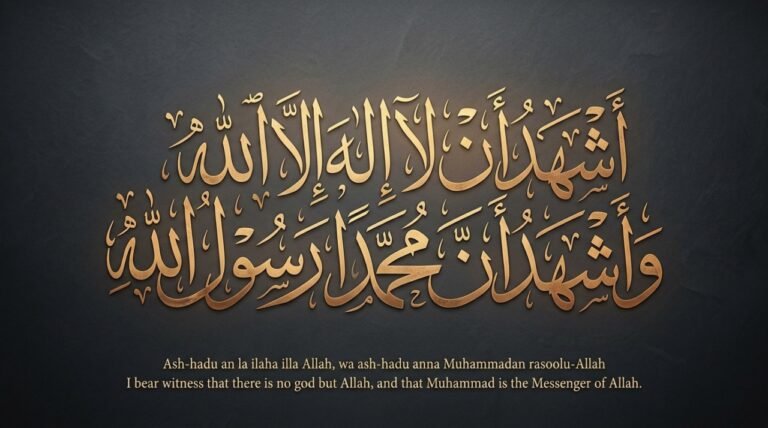
The Shahada is the profession of Islamic faith.
It affirms belief in the oneness of God and Muhammad as God’s messenger.
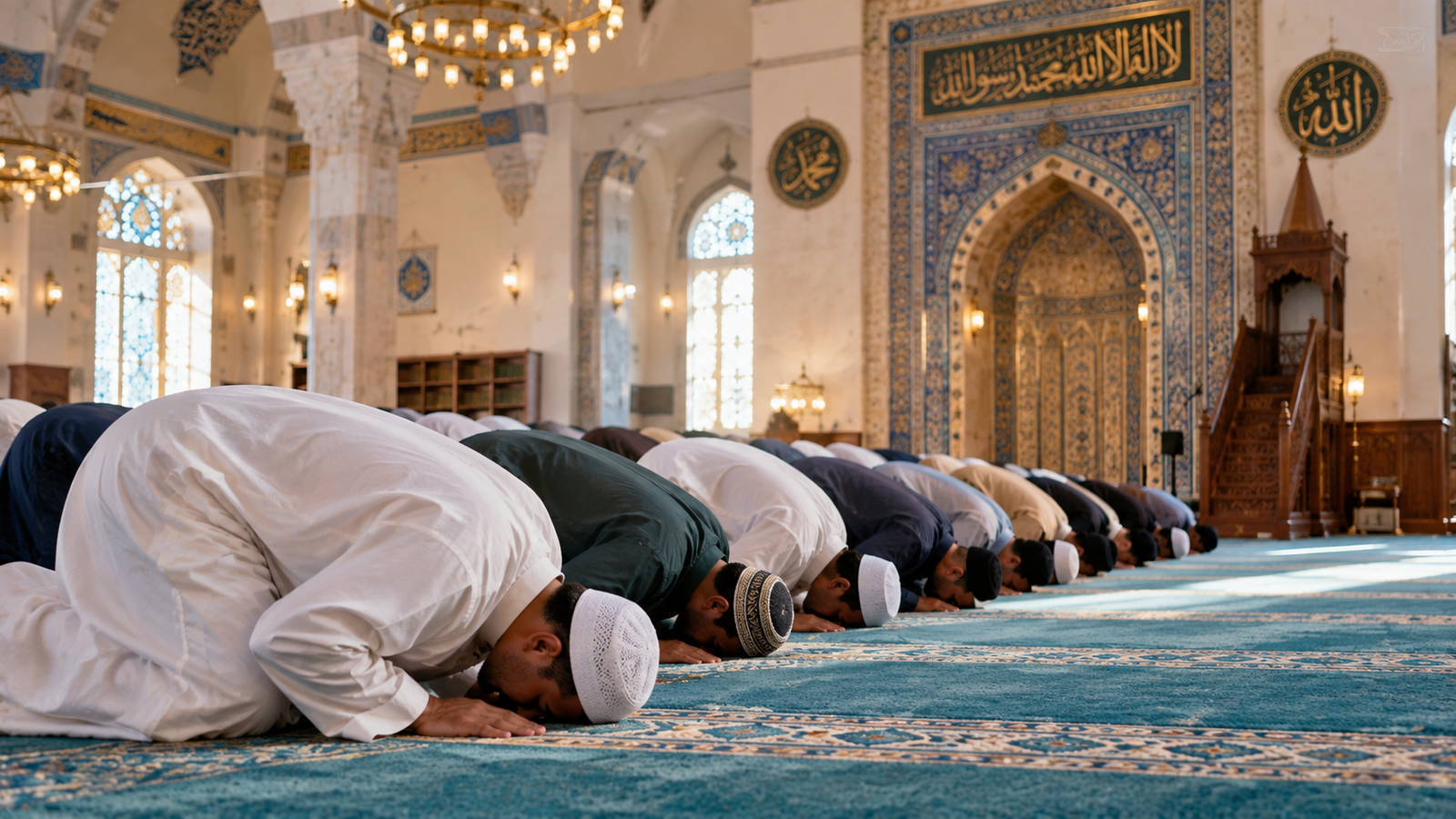
Salah — prayer
Salah refers to the formal ritual prayer performed by Muslims.
Muslims traditionally perform five obligatory prayers each day at specified times.
Prayer provides a regular structure for worship and remembrance of God.
Zakat — charitable giving
Zakat is an obligatory form of charitable giving for Muslims who meet the relevant requirements.
It is connected with helping those in need and is an important part of Islamic social and religious practice.
Sawm — fasting during Ramadan
Sawm refers to fasting, particularly the obligatory fasting observed during the month of Ramadan.
During Ramadan, adult Muslims who are able to fast generally abstain from food and drink from dawn until sunset, with recognized exemptions for certain circumstances.
Hajj — pilgrimage to Mecca
Hajj is the pilgrimage to Mecca.
It is required once in a lifetime for Muslims who are physically and financially able to undertake it.
The pilgrimage includes a series of prescribed rituals and is one of the most significant acts of worship in Islam.
Is Islam a Monotheistic Religion?
Yes.
Monotheism means belief in one God. Islam is a monotheistic religion centered on the absolute oneness of God.
This belief is often described using the Islamic concept of tawhid, which emphasizes God’s uniqueness and oneness.
The Qur’an repeatedly emphasizes God’s oneness, and this belief is foundational to Islamic theology.
Is Islam an Abrahamic Religion?
Yes.
Islam is commonly classified as an Abrahamic religion because of its connection to Abraham and its recognition of a long prophetic tradition associated with figures also important in Judaism and Christianity.
Muslims believe that Abraham, Moses, Jesus, and other prophets were messengers of the same one God.
Islam, however, has its own theology, scripture, religious practices, and understanding of revelation.
What Is the Qur’an?
The Qur’an is the central sacred scripture of Islam.
Muslims believe that the Qur’an is God’s revelation to Prophet Muhammad and that its message provides guidance concerning belief, worship, morality, personal conduct, and society.
The Qur’an is written in Arabic in its original form and is recited as part of Islamic worship.
Translations allow people who do not speak Arabic to study its meaning, while Arabic remains central to the Qur’an’s liturgical use.
Who Was Prophet Muhammad?
Muhammad was the religious figure through whom the Qur’an was revealed, according to Islamic belief.
He was born in Mecca around 570 CE and died in Medina in 632 CE. Muslims regard him as the final prophet in the Islamic prophetic tradition.
His teachings and example are preserved through Islamic traditions concerning his words and actions, particularly the Sunnah and Hadith literature.
Understanding Muhammad is therefore important for understanding both Islamic belief and Islamic practice.
How Is Islam Different From a Culture or Ethnicity?
Islam is a religion, not an ethnicity.
Muslims include people from Arab, African, South Asian, Southeast Asian, European, Central Asian, and many other backgrounds.
In fact, Arabs represent only a minority of the global Muslim population. Britannica notes that more than half of the world’s Muslims live east of Karachi, illustrating how geographically and culturally diverse the Muslim population is.
Islamic religious practices can therefore appear in many different cultural forms.
For example, Muslim clothing, food, architecture, languages, and wedding traditions can vary significantly between countries and communities while sharing the same broad religious identity.
Is Islam the Same as Being Muslim?
No.
Islam is the religion.
Muslim is the term for someone who follows Islam.
A simple comparison is:
- Islam = the religion
- Muslim = a follower of Islam
- Qur’an = Islam’s central scripture
- Muhammad = Islam’s final prophet according to Muslim belief
- Mosque = a place where Muslims commonly worship
This distinction is useful because “Islam” and “Muslim” are related but do not mean the same thing.
Frequently Asked Questions About Islam
Is Islam a religion or a way of life?
Islam is a religion, and Muslims may also describe it as a comprehensive way of life because its teachings address worship, ethics, personal behavior, family relationships, charity, and other areas of life.
Is Islam a monotheistic religion?
Yes. Islam is a monotheistic religion based on belief in one God.
Who is the God of Islam?
Muslims believe in one God, called Allah in Arabic. “Allah” is the Arabic word for God and is also used by Arabic-speaking Christians.
What is the holy book of Islam?
The Qur’an is the central sacred scripture of Islam.
Who founded Islam?
From the historical perspective, Islam emerged in seventh-century Arabia through the preaching and leadership of Muhammad. Muslims understand Muhammad not as the inventor of a new religion but as the final prophet in a long line of prophets sent by God.
What are the Five Pillars of Islam?
The Five Pillars are Shahada (faith), Salah (prayer), Zakat (charitable giving), Sawm (fasting during Ramadan), and Hajj (pilgrimage to Mecca).
How many Muslims are there in the world?
Pew Research Center estimated that Muslims numbered about 2.0 billion worldwide in 2020.
Do all Muslims practice Islam in exactly the same way?
No. Muslims share foundational beliefs and practices, but there are different schools, traditions, cultures, and interpretations within the global Muslim community.
Conclusion
Yes, Islam is a religion.
It is a monotheistic Abrahamic religion centered on belief in one God. Muslims follow the Qur’an and the teachings and example of Prophet Muhammad, whom they regard as the final prophet.
Islam includes beliefs about God, revelation, prophets, angels, judgment and the afterlife, as well as religious practices such as prayer, fasting, charity, and pilgrimage.
The simplest distinction to remember is:
Islam is the religion; a Muslim is a person who follows Islam.
If you are new to Islam, the next step is to explore its core beliefs and practices individually rather than trying to understand the entire religion at once.