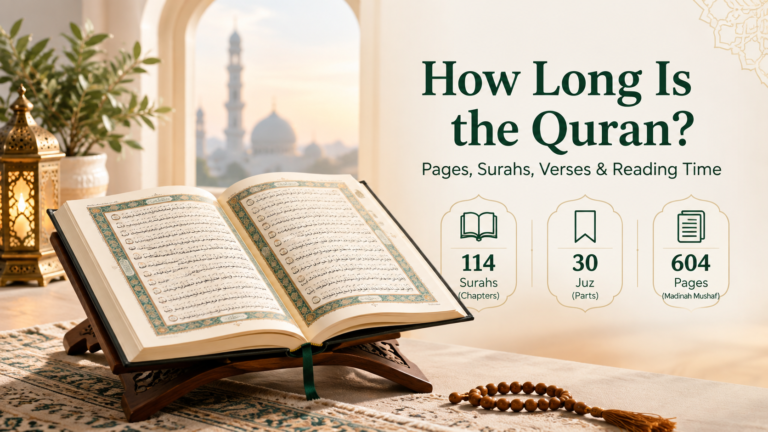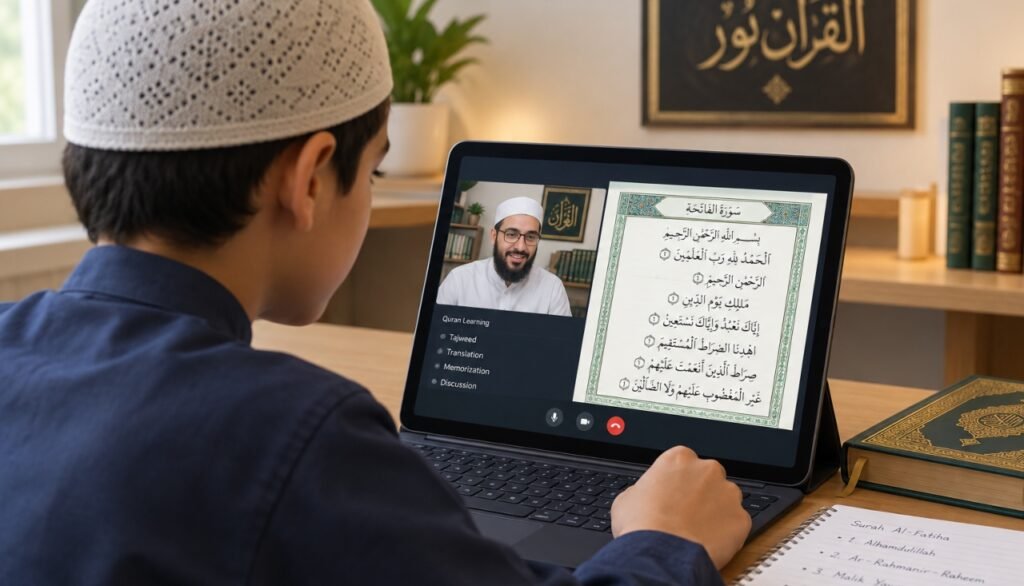
If you are looking for a Quran and prayer learning app, you may want one place where you can learn to read the Quran, improve your pronunciation, understand basic Islamic teachings, and learn how to perform Salah correctly.
Apps can be useful for listening, reading, memorising and practising. However, beginners may also benefit from learning with a qualified teacher who can listen to their recitation, correct mistakes and answer questions about Islamic practice.
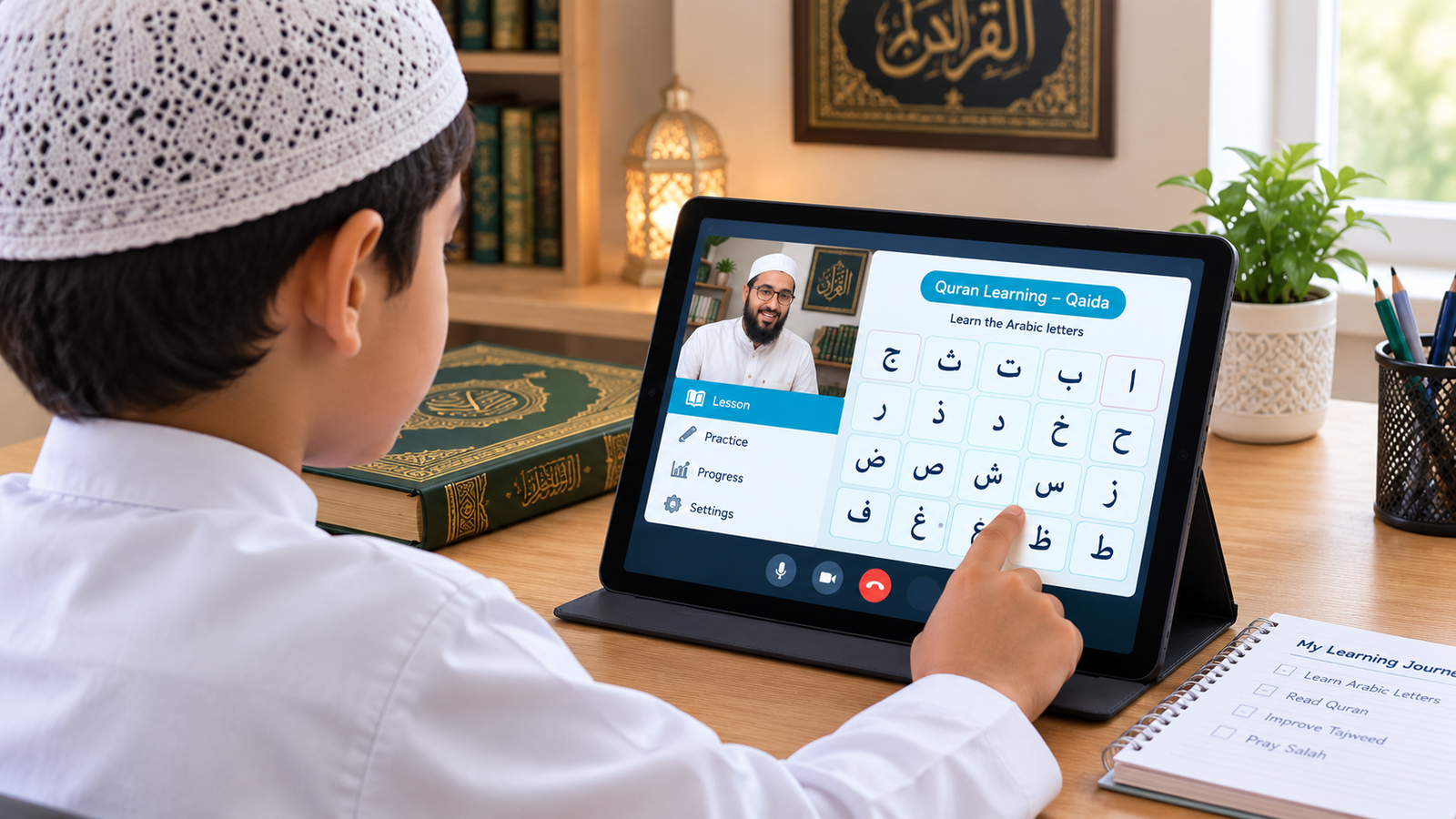
QuranOnlineInstitute.com provides live one-to-one online Quran and Islamic education classes for children and adults. Its courses include Quran reading, Tajweed, Noorani Qaida, and Islamic Studies covering topics such as wudu and Salah.
Table of Contents
- What Is a Quran and Prayer Learning App?
- Can You Learn Quran and How to Pray With an App?
- What Should You Look for in a Quran Learning App?
- How to Learn the Quran as a Beginner
- How to Learn How to Pray Salah
- Can You Learn Quran and Salah Online With a Teacher?
- QuranOnlineInstitute: A Teacher-Led Alternative to an App
- App vs Online Quran Teacher: Which Is Better?
- A Simple Quran and Salah Learning Plan for Beginners
- Frequently Asked Questions
- Start Learning Quran and Salah With a Teacher
What Is a Quran and Prayer Learning App?
A Quran and prayer learning app is a digital resource designed to help Muslims study the Quran and learn or practise aspects of Salah.
Depending on the app, features may include Quran reading, translations, audio recitation, memorisation tools, pronunciation practice, prayer information, duas and Islamic educational material.
For a complete beginner, however, having information available is not always the same as having someone teach you. Quran reading involves pronunciation and recitation skills that can be difficult to assess by yourself.
A useful learning approach can therefore combine digital practice with instruction from a qualified teacher.
Can You Learn Quran and How to Pray With an App?
Yes, an app can be a helpful part of your learning routine.
You can use digital resources to read Quranic text, listen to recitations, revise vocabulary, practise memorisation and review information about Salah.
But there are limits to learning independently.
What Quran apps can help you learn
A good digital learning resource can help you:
- Read the Quran regularly.
- Listen to Quran recitation.
- Review translations.
- Practise short surahs.
- Memorise selected verses.
- Revise Islamic terminology.
- Review prayer information.
- Maintain a consistent study routine.
What an app cannot replace
An app cannot always tell you exactly what you are doing incorrectly when you recite.
For example, a beginner may repeatedly pronounce an Arabic letter incorrectly without noticing the problem. A teacher can hear the recitation and correct the mistake immediately.
The same principle applies to learning practical worship. Written instructions can explain the sequence of Salah, but a teacher can demonstrate, observe and answer questions.
When learning with a teacher is better
A teacher can be particularly helpful if you:
- Are starting Quran reading from the beginning.
- Are unsure about Arabic pronunciation.
- Want to learn Tajweed.
- Need help developing a regular practice routine.
- Are learning Salah for the first time.
- Want to ask questions about something you do not understand.
- Prefer personalised instruction rather than studying alone.
What Should You Look for in a Quran Learning App?
If you are comparing Quran learning apps or online learning options, look beyond the number of features.
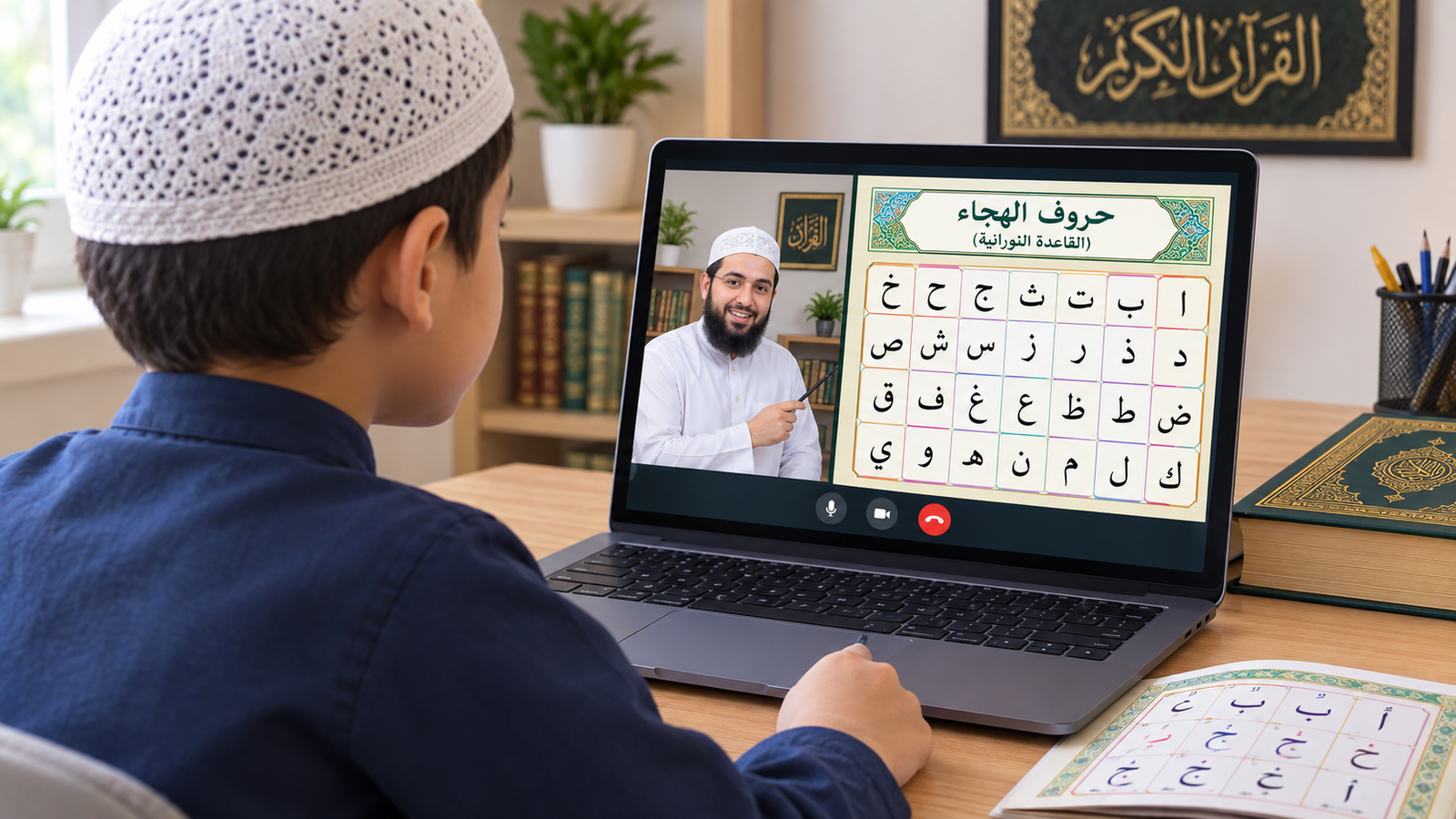
Quran reading lessons
Beginners should have access to a structured progression rather than being expected to start reading the full Quran immediately.
A course may begin with Arabic letters and foundational reading skills before progressing toward fluent Quran recitation.
Tajweed and pronunciation support
Correct pronunciation matters when learning Quran recitation.
Look for learning resources that explain pronunciation clearly and, ideally, provide feedback from a qualified teacher.
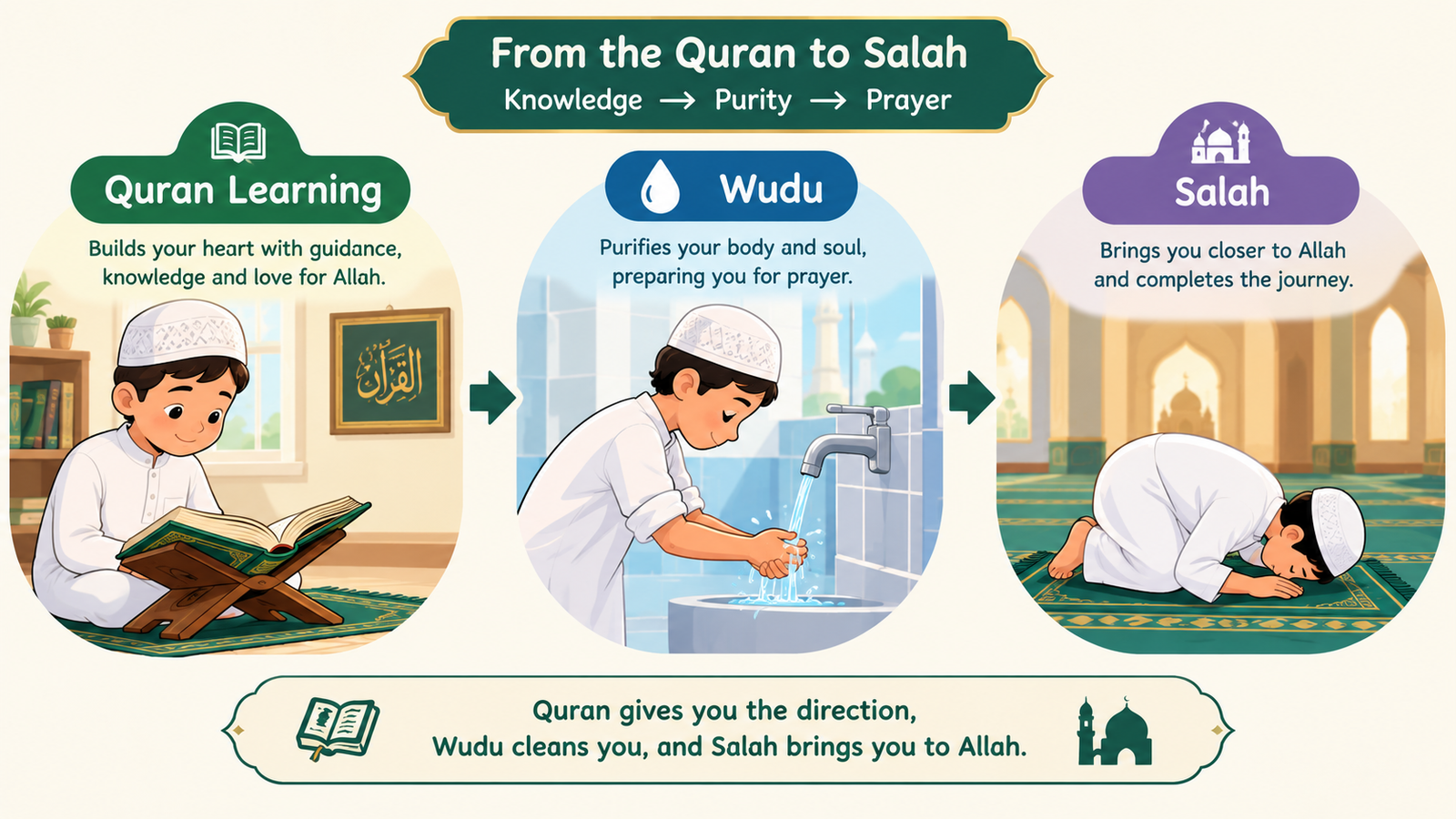
Salah and wudu lessons
If your goal is to learn both Quran and prayer, make sure the learning programme covers practical Islamic education as well as Quran reading.
Wudu, Salah, prayer times, basic supplications and the sequence of prayer can all form part of a beginner’s learning journey.
Beginner-friendly instruction
A good programme should not assume that you already know Arabic.
Beginners may need to start with the alphabet, vowel marks, joining letters and basic pronunciation.
Progress tracking and practice
Consistent practice is often more useful than occasional long study sessions.
A learning system that gives you clear weekly goals can make it easier to build a routine.
Qualified Islamic teachers
For Quran recitation and practical religious education, the qualifications and experience of the teacher matter.
Look for transparent information about who teaches the course and what they are qualified to teach.
How to Learn the Quran as a Beginner
If you are starting from zero, avoid trying to learn everything simultaneously.
Start with the Arabic alphabet and Qaida
A beginner can first learn the Arabic letters, their sounds and how letters change or connect.
A Noorani Qaida-style foundation can help students develop basic reading skills before progressing to continuous Quran reading.
Build Quran reading skills
Once the foundations are established, begin reading short passages aloud.
Reading aloud is important because silent reading does not give you the same opportunity to identify pronunciation problems.
Learn basic Tajweed
Tajweed involves rules and principles used in Quranic recitation.
Instead of trying to memorise every rule immediately, beginners can learn important concepts progressively and practise them while reading actual Quranic verses.
Practise short surahs
Short surahs can provide manageable material for reading and memorisation.
They can also be useful for someone who wants to improve the Quranic recitation used during Salah.
Build a consistent learning routine
For many learners, a short daily practice session is easier to maintain than an occasional intensive session.
For example, you might divide your routine into:
- Quran reading practice
- Tajweed review
- Surah memorisation
- Salah practice
- Revision
Your teacher can adjust the routine according to your current level.
How to Learn How to Pray Salah
Learning Salah involves more than memorising a list of movements.
You should learn the basic requirements, sequence, recitations and practical actions according to a reliable Islamic teaching tradition.
The Quran establishes the importance of prayer, including its prescribed times.
The Prophet Muhammad ﷺ also taught his Companions to pray as they had seen him pray, which is an important basis for learning the practical form of Salah.
Learn wudu first
For beginners, it can be useful to learn the basics of purification before concentrating on the details of Salah.
A structured Islamic education lesson can teach wudu step by step and explain what the student needs to know.
Understand the basic prayer sequence
You should become familiar with the major stages of Salah rather than simply trying to copy movements without understanding their order.
A teacher can demonstrate the sequence and help you practise it.
Learn what to recite in Salah
A beginner may need to learn foundational recitations gradually.
This can include the opening takbir, Surah Al-Fatihah and other necessary or commonly recited portions, depending on the curriculum and school of Islamic jurisprudence being followed.
Practise the movements correctly
Salah includes standing, bowing, prostration and sitting.
Watching a demonstration can help, but personalised instruction is particularly useful if you are unsure about your posture or sequence.
Ask a qualified teacher when you are unsure
Islamic jurisprudence contains legitimate differences regarding some details of worship.
Rather than relying on an anonymous social-media post or an unverified video, ask a qualified teacher or scholar when you need clarification.
Can You Learn Quran and Salah Online With a Teacher?
Yes.
Online learning can combine the convenience of digital technology with direct teacher feedback.
QuranOnlineInstitute offers live one-to-one online Quran lessons for children and adults, including Quran reading, Tajweed and Islamic education. Its Islamic Studies programme specifically includes wudu and Salah lessons.
The lessons can be taken online using a phone, tablet or computer, depending on the student’s setup.
This approach can be useful for beginners who want personal guidance instead of relying entirely on a self-study app.
QuranOnlineInstitute: A Teacher-Led Alternative to an App
If your main goal is to learn Quran and how to pray, QuranOnlineInstitute can provide a structured alternative to learning entirely through an app.
One-to-one Quran lessons
Students receive live instruction rather than simply reading instructions on a screen.
The Quran Reading course focuses on building reading fluency, while the Tajweed course focuses on correct Quranic recitation and pronunciation.
Islamic Studies and Salah
The Islamic Studies programme includes wudu, Salah, daily duas, Islamic manners and other foundational topics.
Lessons for adults and children
The institute offers separate learning paths for different students.
Adults can start from the beginning or return to Quran study after a long break.
Children can receive age-appropriate Islamic education and Quran instruction.
Male and female teachers
Students can choose between qualified male and female teachers according to availability and their preferences.
Flexible scheduling
Online lessons can be scheduled around school, work and other responsibilities.
Free trial class
QuranOnlineInstitute offers a free trial class so prospective students can experience the teaching approach before committing to a paid plan.
App vs Online Quran Teacher: Which Is Better?
The answer depends on what you need.
| Your goal | App/digital resource | Online teacher |
|---|---|---|
| Read Quran regularly | Very useful | Useful |
| Listen to recitation | Very useful | Useful |
| Memorise surahs | Very useful | Very useful |
| Correct pronunciation | Limited without feedback | Strong |
| Learn Tajweed | Helpful for study | Strong with teacher feedback |
| Learn practical Salah | Helpful | Stronger with demonstration |
| Ask questions | Limited | Direct interaction |
| Personalised learning plan | Depends on app | Yes |
| Accountability | Depends on app | Stronger with scheduled lessons |
The best solution for some students may actually be both: use digital tools for daily practice and a qualified teacher for instruction and correction.
A Simple Quran and Salah Learning Plan for Beginners
If you are starting from scratch, keep the process manageable.
Week 1–2: Foundations
Focus on:
- Arabic letters
- Basic sounds
- Harakat
- Simple Quran reading exercises
- Basic wudu knowledge
- Introduction to Salah
Week 3–4: Quran reading
Continue practising:
- Connected letters
- Short Quranic words
- Short surahs
- Correct pronunciation
- Basic Tajweed concepts
At the same time, continue reviewing Salah.
Continuing practice
As your skills improve, your learning plan can include:
- Regular Quran reading
- Tajweed improvement
- Surah memorisation
- Salah recitation
- Islamic vocabulary
- Wudu and Salah revision
- Questions with your teacher
The important thing is consistency. You do not need to master everything in one week.
Frequently Asked Questions
What is the best app to learn Quran and how to pray?
The best option depends on your learning needs. An app can be useful for Quran reading, listening and practice, while a qualified teacher can provide personalised correction and instruction in Quran and Salah.
Can I learn Quran without knowing Arabic?
Yes. Beginners can start with Arabic letters and foundational Quran reading skills before progressing to fluent recitation.
Can I learn how to pray online?
Yes. Online Islamic education can teach the basics of wudu and Salah. A live teacher can also demonstrate the prayer and answer questions as you practise.
Can children learn Quran and Salah online?
Yes. Children can follow age-appropriate Quran and Islamic Studies programmes. QuranOnlineInstitute’s Islamic Studies course covers topics including wudu, Salah, duas, seerah and manners.
Can adults learn Quran from zero?
Yes. Adults can start as complete beginners. QuranOnlineInstitute specifically offers adult Quran classes for students beginning from the Arabic alphabet as well as those returning to Quran study.
Do I need a Quran teacher if I use an app?
Not necessarily, but a teacher can be very valuable for pronunciation, Tajweed, accountability and questions about practical Islamic learning.
Can I learn Tajweed online?
Yes. A structured online Tajweed course can teach rules such as makharij and other recitation principles while allowing a teacher to listen to your recitation and correct mistakes.
Is QuranOnlineInstitute a mobile app?
QuranOnlineInstitute currently presents its service as live online classes rather than a standalone mobile app. Lessons are delivered online using platforms such as Zoom, Google Meet or Skype.
How can I start learning Quran and Salah?
You can begin by assessing your current Quran reading level, identifying what you need to learn about Salah and choosing either a self-study resource or a qualified teacher. For personalised instruction, you can book a free trial class with QuranOnlineInstitute.
Start Learning Quran and Salah With a Teacher
A Quran learning app can be a useful tool, but learning becomes more personal when you can ask questions, recite to a teacher and receive corrections.
If you want to learn Quran reading, Tajweed and Islamic basics while also developing your understanding of Salah, consider starting with a one-to-one online lesson.
Book a free Quran class with QuranOnlineInstitute and discover your learning level, meet a teacher and receive a personalised study plan.