The last 2 ayat of Surah Al-Baqarah are verses 285 and 286. They are among the most meaningful verses for Muslims to recite at night, combining the declaration of faith with beautiful supplications for forgiveness, mercy, and Allah’s help.
Known by their opening words, Amana ar-Rasul, these verses remind believers to trust Allah, follow His guidance, accept personal responsibility, and seek His forgiveness.
The Prophet Muhammad ﷺ taught their special virtue in an authentic Hadith recorded in Sahih al-Bukhari. Learning these verses is therefore a valuable part of a Muslim’s Quran routine.
In this guide, you will find the Arabic text, English transliteration, meaning, explanation, authentic Hadith, and practical advice for memorising the last two ayat of Surah Al-Baqarah.
What Are the Last Two Ayat of Surah Al-Baqarah?
The last two ayat of Surah Al-Baqarah are:
- Surah Al-Baqarah, Ayat 285: Begins with Amana ar-Rasul and describes the faith of the Messenger and the believers.
- Surah Al-Baqarah, Ayat 286: Begins with La yukallifullahu nafsan illa wus’aha and teaches believers to ask Allah for forgiveness, mercy, and assistance.
Surah Al-Baqarah is the second chapter of the Holy Quran, and these two verses form its closing passage.
They are also known as Khawatim Surah Al-Baqarah, meaning the concluding verses of Surah Al-Baqarah.
Surah Al-Baqarah Last 2 Ayat in Arabic
Ayat 285
آمَنَ الرَّسُولُ بِمَا أُنْزِلَ إِلَيْهِ مِنْ رَبِّهِ وَالْمُؤْمِنُونَ ۚ كُلٌّ آمَنَ بِاللَّهِ وَمَلَائِكَتِهِ وَكُتُبِهِ وَرُسُلِهِ لَا نُفَرِّقُ بَيْنَ أَحَدٍ مِنْ رُسُلِهِ ۚ وَقَالُوا سَمِعْنَا وَأَطَعْنَا ۖ غُفْرَانَكَ رَبَّنَا وَإِلَيْكَ الْمَصِيرُ ﴿٢٨٥﴾
Ayat 286
لَا يُكَلِّفُ اللَّهُ نَفْسًا إِلَّا وُسْعَهَا ۚ لَهَا مَا كَسَبَتْ وَعَلَيْهَا مَا اكْتَسَبَتْ ۗ رَبَّنَا لَا تُؤَاخِذْنَا إِنْ نَسِينَا أَوْ أَخْطَأْنَا ۚ رَبَّنَا وَلَا تَحْمِلْ عَلَيْنَا إِصْرًا كَمَا حَمَلْتَهُ عَلَى الَّذِينَ مِنْ قَبْلِنَا ۚ رَبَّنَا وَلَا تُحَمِّلْنَا مَا لَا طَاقَةَ لَنَا بِهِ ۖ وَاعْفُ عَنَّا وَاغْفِرْ لَنَا وَارْحَمْنَا ۚ أَنْتَ مَوْلَانَا فَانْصُرْنَا عَلَى الْقَوْمِ الْكَافِرِينَ ﴿٢٨٦﴾
Reference: The Holy Quran, Surah Al-Baqarah (2:285–286).
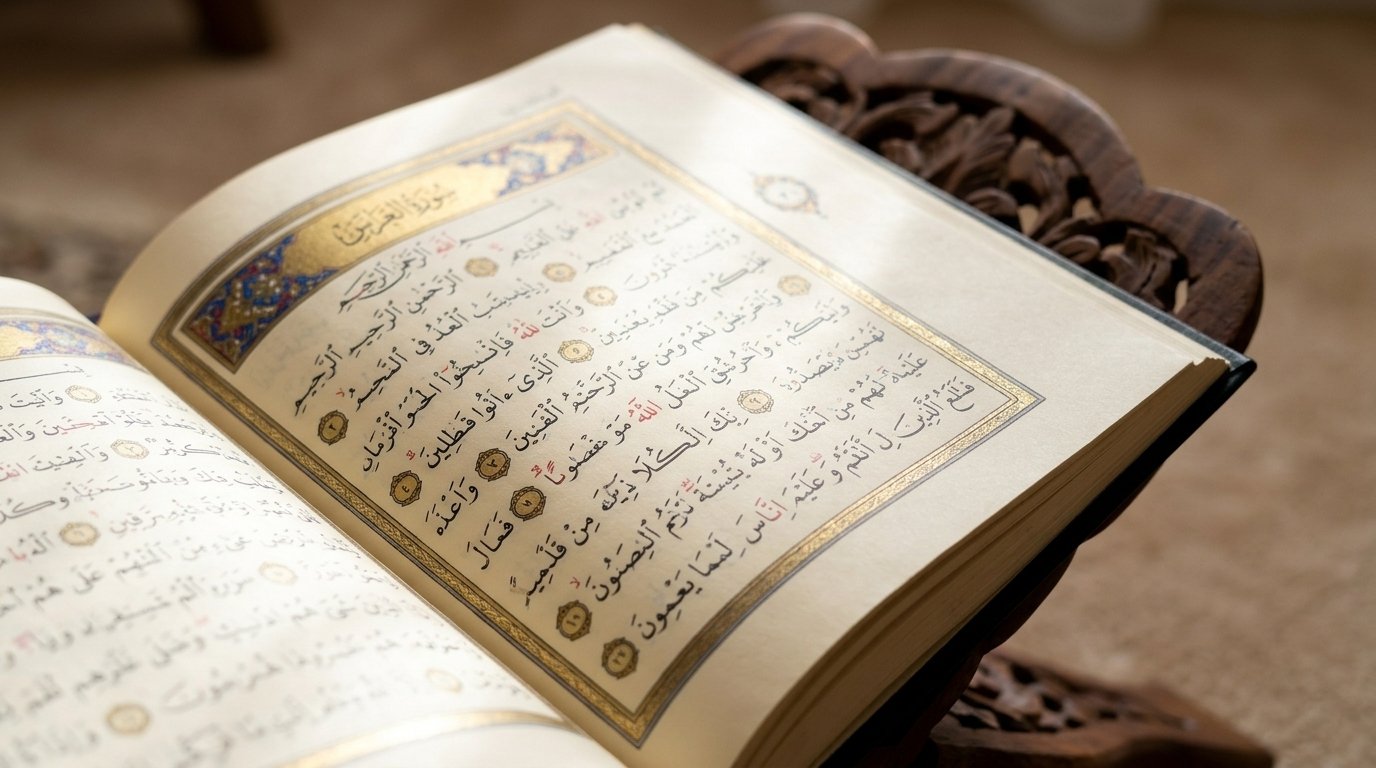
Transliteration of the Last Two Verses of Surah Al-Baqarah
If you are learning Quranic Arabic, transliteration can help you become familiar with the words before reading directly from the Arabic script.
However, English transliteration cannot fully represent Arabic pronunciation, articulation points, or Tajweed rules. Use it as a learning aid, not a replacement for listening to a qualified Quran reciter.
Ayat 285 Transliteration
Āmana r-rasūlu bimā unzila ilayhi min rabbihī wal-mu’minūn.
Kullun āmana billāhi wa-malā’ikatihī wa-kutubihī wa-rusulihī.
Lā nufarriqu bayna aḥadin min rusulihī.
Wa-qālū sami’nā wa-aṭa’nā.
Ghuf’rānaka rabbanā wa-ilaykal-maṣīr.
Ayat 286 Transliteration
Lā yukallifullāhu nafsan illā wus’ahā.
Lahā mā kasabat wa-‘alayhā maktasabat.
Rabbanā lā tu’ākhidhnā in nasīnā aw akhṭa’nā.
Rabbanā wa-lā taḥmil ‘alaynā iṣran kamā ḥamaltahū ‘alalladhīna min qablinā.
Rabbana wa-la tuḥammilnā mā lā ṭāqata lanā bihī.
Wa-‘fu ‘annā, waghfir lanā, warḥamnā.
Anta mawlānā fanṣurnā ‘alal-qawmil-kāfirīn.
Pronunciation note: Transliteration conventions differ. Listen to the complete recitation and follow a teacher for accurate Tajweed.
English Meaning of the Last 2 Ayat of Surah Al-Baqarah
last 2 ayat of Surah Al-Baqarah understanding the meaning of Quranic verses makes recitation more meaningful. These translations convey the meaning of the verses in accessible English.
English Meaning of Ayat 285
The Messenger believes in what has been revealed to him from his Lord, and the believers also believe. Thy all believe in Allah, His angels, His revealed Books, and His messengers.
They affirm that they make no distinction between any of Allah’s messengers. They say:
“We hear and we obey. Our Lord, we seek Your forgiveness, and to You is our final return.”
English Meaning of Ayat 286
Allah does not burden a soul beyond its capacity. Each person receives the consequence of the good they have earned and bears the consequence of the evil they have committed.
The believers then pray:
“Our Lord, do not hold us accountable if we forget or make a mistake.
Or Lord, do not place upon us a burden like the one You placed upon those before us.
Our Lord, do not burden us with what we cannot bear.
Pardon us, forgive us, and have mercy upon us. You are our Protector, so help us against the disbelieving people.”
Reference: Surah Al-Baqarah 2:285–286. The English wording above is a meaning-based rendering, not a replacement for the Arabic Quran.
What Is the Meaning and Explanation of Ayat 285?
The first of the last two verses begins with a declaration of faith.
It describes the belief of Prophet Muhammad ﷺ and the believers in the revelation sent by Allah.
There are several important teachings within this verse.
1. Belief in Allah
The verse begins by affirming belief in Allah. For Muslims, faith in Allah is the foundation of Islamic belief and worship.
A believer recognises Allah as the Creator, Sustainer, and Lord of everything.
2. Belief in Angels and Revealed Books
The verse mentions belief in Allah’s angels and His Books.
Muslims believe that Allah created angels and sent revelations to His messengers. The Quran is the final revealed Book, and belief in the earlier revelations is also part of Islamic faith.
3. Belief in All the Messengers
The verse teaches Muslims not to reject any of Allah’s messengers.
Muslims believe in the prophets and messengers sent by Allah, including Prophet Adam, Prophet Ibrahim, Prophet Musa, Prophet Isa, and Prophet Muhammad (peace be upon them all).
Accepting some messengers while rejecting others contradicts the declaration of faith in this verse.
4. We Hear and We Obey
The words Sami’na wa ata’na mean “We hear and we obey.”
These words express the attitude of a believer towards Allah’s guidance.
Faith is more than knowing religious teachings. It also involves accepting Allah’s commands and making a sincere effort to follow them.
The verse ends by asking Allah for forgiveness and reminding believers that their final return is to Him.
What Is the Meaning and Explanation of Ayat 286?
Ayat 286 is especially meaningful because it begins with a reminder of Allah’s mercy and continues with a series of beautiful supplications.
1. Allah Does Not Burden a Soul Beyond Its Capacity
The opening statement of this verse reminds believers that Allah does not place a religious burden upon a soul beyond its capacity.
This is a source of reassurance during difficult circumstances.
A Muslim facing hardship should remember that Allah knows every person’s situation, abilities, and struggles.
However, this verse should not be used to dismiss the responsibilities of faith. It teaches trust in Allah while encouraging believers to fulfil their duties sincerely.
2. Every Person Is Responsible for Their Deeds
The verse explains that a person receives the consequences of their good actions and bears responsibility for their wrongdoing.
This reminds Muslims that their choices matter.
A sincere act of kindness, an honest transaction, an act of worship, and an intentional wrongdoing are not meaningless. Allah knows what people do.
3. Asking Allah for Forgiveness After Forgetfulness and Mistakes
The believers pray:
Rabbanā lā tu’ākhidhnā in nasīnā aw akhṭa’nā.
“Our Lord, do not hold us accountable if we forget or make a mistake.”
Human beings make mistakes and sometimes forget. This supplication teaches Muslims to turn to Allah and ask for His forgiveness instead of becoming hopeless.
4. Asking Allah Not to Place Heavy Burdens Upon Us
The believers ask Allah not to place upon them burdens like those carried by earlier communities.
This request reflects their dependence upon Allah’s mercy and their awareness of human weakness.
5. Asking for Help With Difficulties
The words Rabbanā wa lā tuḥammilnā mā lā ṭāqata lanā bihī mean:
“Our Lord, do not burden us with what we cannot bear.”
Muslims recite this supplication when seeking Allah’s help through challenges.
6. Asking for Pardon, Forgiveness, and Mercy
The final requests include:
- Wa’fu ‘annā — Pardon us.
- Waghfir lanā — Forgive us.
- Warḥamnā — Have mercy upon us.
The verse ends by acknowledging Allah as the believers’ Protector and asking Him for help.
These words provide a beautiful model of turning to Allah with humility and hope.
What Are the Benefits of Reciting the Last Two Ayat of Surah Al-Baqarah?
The special virtues of these verses are established through authentic Hadith. Muslims should learn what the Prophet ﷺ actually taught rather than relying on unsupported claims circulated online.
1. They Are Sufficient for the Person Who Recites Them at Night
The most well-known virtue is mentioned in Sahih al-Bukhari.
Abu Mas’ud Al-Ansari (may Allah be pleased with him) narrated that Prophet Muhammad ﷺ said:
“Whoever recites the last two verses of Surah Al-Baqarah at night, they will be sufficient for him.”
Reference: Sahih al-Bukhari 5009.
This Hadith is the main reason Muslims make these verses part of their nighttime routine.
Scholars have explained the word “sufficient” in different ways. Interpretations include sufficiency in nighttime worship and protection from harm or Shaytan. These explanations should not be reduced to one exclusive meaning.
2. They Are Described as Two Lights
In Sahih Muslim 806, a Hadith reports that the Prophet ﷺ was given two lights that had not been given to a prophet before him: Surah Al-Fatihah and the concluding verses of Surah Al-Baqarah.
This narration highlights the special status of these Quranic passages.
3. They Encourage Faith and Trust in Allah
Ayat 285 strengthens the believer’s understanding of faith, while Ayat 286 teaches reliance upon Allah and the importance of asking Him for forgiveness.
Their message is particularly meaningful during times of worry, difficulty, or spiritual weakness.
4. They Teach Muslims Beautiful Supplications
Ayat 286 contains several requests that Muslims can include in their personal duas.
It teaches believers to ask for pardon, forgiveness, mercy, and help.
These are meaningful requests for anyone seeking a closer relationship with Allah.
When Should You Recite the last 2 ayat of Surah Al-Baqarah?
The authentic Hadith mentions reciting these verses at night.
Many Muslims include them in their bedtime routine, usually after completing their evening prayers and before going to sleep.
The Hadith does not restrict the recitation to one particular minute or require a special number of repetitions.
A simple routine is enough:
- Complete your evening worship.
- Read Ayat 285 and 286 carefully.
- Reflect on their meanings.
- Ask Allah for forgiveness and mercy.
- Make them a regular part of your nighttime Quran recitation.
If you are still learning, listen to a reliable reciter and practise the verses with a Quran teacher.
How Can You Memorise the last 2 ayat of Surah Al-Baqarah?
Memorising Quranic verses becomes easier when you divide them into manageable sections.
Rather than trying to memorise both long verses in one sitting, follow a gradual approach.
Step 1: Listen to the recitation.
Choose a qualified Quran reciter and listen carefully to Ayat 285 and 286.
Step 2: Learn the Arabic pronunciation.
Practise the words slowly. Pay attention to Arabic letters, articulation points, elongation, and other Tajweed rules.
Step 3: Memorise short sections.
Start with the opening of Ayat 285. Repeat a short passage until you can recite it without looking.
Then continue with the next section.
Step 4: Understand the meaning.
Learning what the words mean helps you remember the order and message of the verses.
Step 5: Revise regularly.
Read the memorised sections during your daily Quran practice. Review previous portions before learning new ones.
Parents can use the same approach when helping children memorise the last two verses of Surah Al-Baqarah.
Common Questions About the last 2 ayat of Surah Al-Baqarah
What are the last two ayat of Surah Al-Baqarah?
They are verses 285 and 286 of Surah Al-Baqarah. The first begins with Amana ar-Rasul, and the second begins with La yukallifullahu nafsan illa wus’aha.
Why should Muslims recite the last two verses at night?
The Prophet Muhammad ﷺ stated in an authentic Hadith that whoever recites these two verses at night, they will suffice him. This narration is recorded in Sahih al-Bukhari 5009.
Can I recite the last two ayat before sleeping?
Yes. Reciting them before sleeping is a practical way to include the nighttime recitation in your daily routine.
How many times should I recite the last two verses?
The Hadith about their nighttime virtue mentions reciting the two verses, without specifying a required number of repetitions. One complete recitation fulfils the wording of this Hadith.
What is Amana ar-Rasul?
Amana ar-Rasul refers to the opening words of Ayat 285, meaning that the Messenger believed in what was revealed to him from his Lord. The name is also used to refer to the concluding two verses of Surah Al-Baqarah.
What is the main message of Ayat 286?
Ayat 286 reminds Muslims that Allah does not burden a soul beyond its capacity. It also teaches personal responsibility and includes supplications asking Allah for pardon, forgiveness, mercy, and help.
Can beginners learn these verses without knowing Arabic?
Yes. Beginners can start by listening to recitation and using transliteration as a learning aid. However, learning directly from Arabic with a qualified teacher is the better way to develop correct Quranic pronunciation.
Make the Last Two Ayat Part of Your Daily Quran Routine
The last 2 ayat of Surah Al-Baqarah bring together faith, obedience, personal responsibility, and sincere supplication. Their authentic virtue of nighttime recitation makes them especially valuable to learn and practise.
Do not rush through them simply to finish your daily recitation. Learn the Arabic, understand the meaning, and work on your pronunciation.
If you have not memorised these verses yet, start with a few words each day and ask a qualified Quran teacher to help you correct your recitation. A consistent effort to learn the words of Allah is a beautiful habit to maintain throughout life.