Table of Contents
- Who Wrote the Quran?
- According to Islam, Who Is the Author of the Quran?
- Did Prophet Muhammad Write the Quran Himself?
- Who Wrote Down the Quran?
- Who First Compiled the Quran Into One Collection?
- Who Standardized the Written Quran?
- Was the Quran Written Down During Muhammad’s Lifetime?
- When Was the Quran Written?
- Was the Quran Changed After Muhammad’s Death?
- What Do Early Quran Manuscripts Tell Us?
- Who Wrote the Quran? The Short Answer
- Frequently Asked Questions
- Conclusion
Who Wrote the Quran?
The answer depends on what is meant by “wrote.”
According to Islamic belief, Allah is the source and author of the Quran, which Muslims believe was revealed to the Prophet Muhammad through the Angel Gabriel (Jibril). Muhammad’s role was to receive and convey the revelation, while companions of the Prophet recorded portions of it in writing and memorized it.
The Quran was therefore not originally produced as a book written by one person sitting down and composing it. According to the traditional Islamic account, it was revealed gradually to Muhammad, recited to his followers, memorized by them, and recorded by scribes during his lifetime.
After Muhammad’s death, the written material and memorized text were brought together in an official compilation during the caliphate of Abu Bakr. Later, during the caliphate of Uthman ibn Affan, an authoritative written standard was prepared and distributed to major centers of the Muslim community.
This makes it important to distinguish between revelation, writing, compilation, and standardization.
According to Islam, Who Is the Author of the Quran?
The Quran as Revelation from Allah
In Islam, the Quran is understood as the word of Allah rather than a book authored by Muhammad.
Muslims believe Muhammad received revelation from Allah through the Angel Gabriel and conveyed those revelations to his companions. The Quran itself describes Muhammad as a messenger who communicates revelation rather than as the author of the message.
This theological distinction is central to understanding the question “Who wrote the Quran?”
From the Islamic perspective:
- Allah is the source of the revelation.
- Gabriel (Jibril) delivered the revelation to Muhammad.
- Muhammad received and conveyed the revelation.
- The companions and scribes recorded portions of the revelation.
- Abu Bakr’s administration oversaw the first official compilation.
- Uthman’s administration later standardized the written copies.
Yaqeen Institute’s research describes the Quran in Islamic theology as divine speech revealed to Muhammad through Gabriel and preserved through both oral and written transmission.
Muhammad’s Role in Conveying the Revelation
Muhammad’s role was not simply that of an author or editor.
According to the traditional Islamic account, when revelation came, Muhammad recited it to his companions. Some companions memorized the passages, while scribes recorded them on the writing materials available at the time.
The written material was therefore part of the preservation process from the earliest period.
This is why asking only “Who physically wrote the Quran?” does not fully answer the larger question of where the Quran came from.
Did Prophet Muhammad Write the Quran Himself?
The traditional Islamic account does not describe Muhammad as the person who physically wrote the Quran as a manuscript.
Instead, he received the revelation, recited it, taught it to his companions, and directed scribes in its recording.
The Quran was preserved through a combination of recitation, memorization, and writing. Yaqeen Institute’s research identifies numerous companions who participated in writing for the Prophet and notes the important role of Zayd ibn Thabit in later compilation and transcription efforts.
Therefore, saying “Muhammad wrote the Quran” can be misleading if “wrote” means physically authored or transcribed the complete book himself.
A more accurate description is:
Muslims believe Muhammad received and conveyed the Quranic revelation, while companions recorded the revelation in writing and preserved it through memorization.
Who Wrote Down the Quran?
Several companions of Muhammad served as scribes or participated in recording the revelation.
Zayd ibn Thabit
One of the most important names is Zayd ibn Thabit.
Zayd was closely associated with the Prophet and later played a central role in both major early compilation projects.
According to the traditional account, Zayd led the collection of Quranic material during Abu Bakr’s caliphate. He also led the committee responsible for preparing standardized copies during Uthman’s caliphate.
Yaqeen’s research identifies Zayd as a major Quranic scribe and states that he led the committee involved in the Quran’s compilation under Abu Bakr and its later transcription under Uthman.
Other Companions Who Served as Scribes
Zayd was not the only person who recorded revelation.
Traditional sources identify a number of companions who wrote for Muhammad. These included figures such as Ubayy ibn Ka’b and other companions who participated in recording or preserving Quranic material.
The important point is that the Quran was not dependent on a single handwritten manuscript produced by one individual.
Its preservation involved a community of people who recited, memorized, taught, and recorded the revelation.
Oral Memorization and Written Records
The Quran has historically been transmitted through both oral and written means.
This is an important feature of the Quran’s early history. Written fragments existed during Muhammad’s lifetime, while memorization provided another means of preserving the wording.
Yaqeen’s research describes the early preservation process as involving both written records and memorization, with scribes recording revelation as it was conveyed by Muhammad.
Who First Compiled the Quran Into One Collection?
Abu Bakr’s Compilation
After Muhammad died in 632 CE, the Muslim community faced the challenge of preserving the Quranic material that had been recorded and memorized during his lifetime.
According to the traditional Islamic narrative, Abu Bakr, the first caliph, authorized the first official compilation into a unified written collection.
The project was led by Zayd ibn Thabit.
Yaqeen Institute describes Abu Bakr’s compilation as an effort to gather the Quran’s written material into a complete official collection. It also distinguishes this project from Uthman’s later standardization, which had a different purpose.
Zayd ibn Thabit’s Role
Zayd’s task involved gathering Quranic material and verifying it through the preservation methods available to the early Muslim community.
The traditional account emphasizes both written evidence and memorization.
This is significant because the first compilation was not presented as someone inventing a new text. It was a preservation project intended to bring together material that had already been transmitted during Muhammad’s lifetime.
Why the First Compilation Was Undertaken
One major concern was the death of people who had memorized the Quran during the early Muslim conflicts.
The traditional account therefore presents Abu Bakr’s compilation as a precaution to preserve the complete text in a single collection.
The resulting collection remained in the custody of the early caliphs and was later associated with Hafsa, the daughter of Umar and widow of Muhammad.
Who Standardized the Written Quran?
Uthman ibn Affan and the Uthmanic Codex
Several years after Abu Bakr’s compilation, the Muslim community had expanded beyond Arabia.
Different communities were learning and reciting the Quran, and disagreements over recitation created concerns about unity.
During the caliphate of Uthman ibn Affan, a committee led by Zayd ibn Thabit prepared standardized written copies.
This became associated with what is commonly called the Uthmanic codex.
Yaqeen’s detailed study explains that Uthman’s project differed from Abu Bakr’s: Abu Bakr’s project focused on gathering and preserving the complete text, whereas Uthman’s project focused on establishing a common written standard for the expanding Muslim community.
Why Uthman Standardized the Written Copies
The purpose was not to create a new Quran.
Rather, according to the traditional account, Uthman’s administration sought to prevent disputes caused by differences in recitation and written materials circulating across different regions.
Official copies were produced and sent to important centers of the Muslim world.
How the Standard Copies Were Distributed
Traditional accounts describe official copies being sent to major regional centers.
Other written materials that did not conform to the standardized text were ordered to be destroyed or corrected.
This episode is sometimes misunderstood as Uthman “writing the Quran.”
That is not the most accurate description.
Uthman did not author the Quran. His role was connected with the standardization and distribution of an authoritative written form of the Quran.
Was the Quran Written Down During Muhammad’s Lifetime?
According to the traditional Islamic account, yes.
The Quran was being recorded during Muhammad’s lifetime by scribes, even though it was not yet assembled into the single bound form familiar today.
Revelation was also memorized and recited by Muhammad and his companions.
Yaqeen’s research identifies written records as an important part of the preservation process during Muhammad’s lifetime and notes that the Quran was preserved through both oral and written transmission.
The distinction is therefore:
During Muhammad’s lifetime: revelations were received, recited, memorized, and recorded in written form.
After Muhammad’s death: the written material was gathered into an official collection under Abu Bakr.
Under Uthman: standardized written copies were prepared and distributed to unify the community around an authoritative written form.
When Was the Quran Written?
The Quranic revelations are traditionally understood by Muslims to have been revealed to Muhammad over approximately 23 years, beginning around 610 CE and continuing until his death in 632 CE.
Writing occurred during this period, but the Quran was not initially a single bound volume.
Later compilation transformed the dispersed written material into an organized collection.
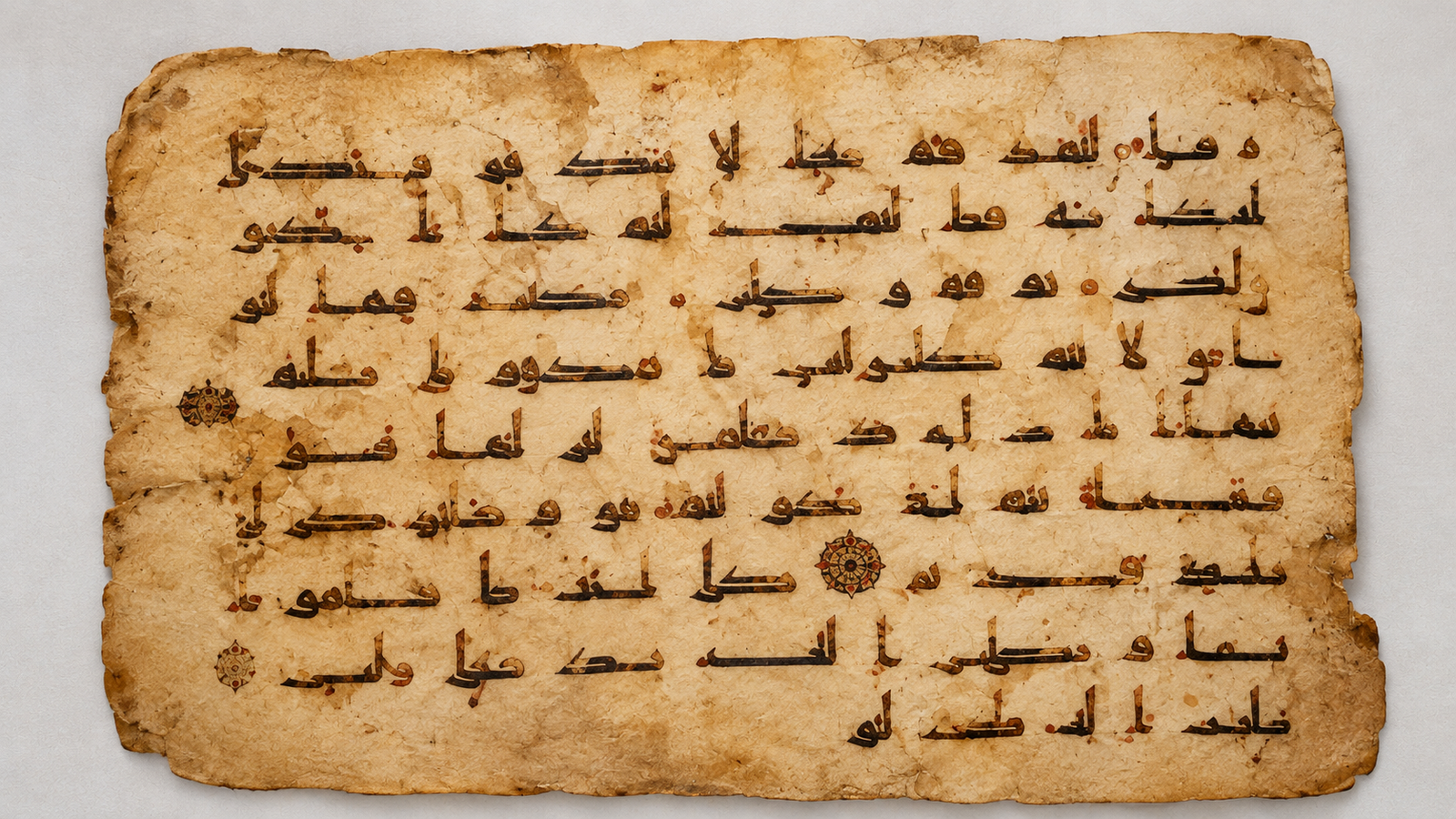
Early Quran manuscripts provide physical evidence of the long history of Quranic writing and transmission. The Metropolitan Museum, for example, catalogs Quran folios written on parchment in early Islamic scripts and describes features such as Hijazi and Kufic writing styles.
Was the Quran Changed After Muhammad’s Death?
This question requires separating theological belief from historical analysis.
The traditional Islamic position
Muslims believe that the Quran was faithfully preserved and that the text compiled and standardized by the early Muslim community represents the revelation conveyed by Muhammad.
The traditional account places particular importance on memorization, written records, and the verification processes associated with the early compilations.
The historical perspective
Academic scholarship approaches the history of the Quran using textual, manuscript, linguistic, and historical evidence.
Scholars do not all frame the question in exactly the same way as Muslim theologians, and there are debates concerning the development of the Quranic text, its readings, manuscripts, and early transmission.
For that reason, a responsible explanation should not pretend that theological and academic methodologies are identical.
What can be said historically is that early Quran manuscripts survive, and researchers can compare these manuscripts with later textual traditions. Museums and academic projects have documented early Quranic manuscripts and their characteristics.
What Do Early Quran Manuscripts Tell Us?
Early Quran manuscripts are important because they provide physical evidence for the history of the Quran’s written transmission.
The surviving manuscripts vary in script, parchment or paper, decoration, vocalization, and other features.
For example, the Metropolitan Museum describes early Quran manuscripts written in Hijazi script and later manuscripts using Kufic and other scripts. Some early manuscripts omit consonantal dots and vowel marks that became more common in later periods.
These manuscript differences should not automatically be confused with differences in authorship.
A manuscript’s calligraphy, spelling conventions, vocalization, or decorative features can tell researchers about how texts were written and read in different periods.
Who Wrote the Quran? The Short Answer
If by “who wrote the Quran?” you mean who authored it, the Islamic answer is that Allah revealed the Quran to Prophet Muhammad, and Muhammad conveyed that revelation to his followers.
If you mean who physically wrote down the revelations, a number of Muhammad’s companions served as scribes, including Zayd ibn Thabit.
you mean who first collected the Quran into an official written compilation, the traditional account credits Abu Bakr, with Zayd ibn Thabit leading the collection.
If you mean who standardized and distributed an authoritative written version, that was done under Uthman ibn Affan, again with Zayd ibn Thabit playing a central role.
So the most accurate answer is not simply “Muhammad,” “Zayd,” “Abu Bakr,” or “Uthman.”
Each played a different role in the Quran’s revelation, recording, compilation, and transmission.
Frequently Asked Questions
Did Muhammad write the Quran?
According to the traditional Islamic account, Muhammad received and conveyed the Quranic revelation rather than personally writing the complete Quranic text as a manuscript. Companions recorded the revelation in writing and also memorized it.
Who physically wrote the Quran?
Multiple companions served as scribes and recorded Quranic revelation. Zayd ibn Thabit is among the most important figures associated with the writing and later compilation of the Quran.
Who compiled the Quran?
According to the traditional Islamic account, Abu Bakr authorized the first official compilation after Muhammad’s death, with Zayd ibn Thabit leading the collection.
Who was Zayd ibn Thabit?
Zayd ibn Thabit was a companion of Muhammad who is traditionally identified as an important scribe of revelation. He later led the Quran’s compilation under Abu Bakr and the preparation of standardized copies under Uthman.
Did Abu Bakr write the Quran?
No. Abu Bakr did not personally author the Quran. According to the traditional account, he authorized and oversaw the first official compilation of Quranic material after Muhammad’s death.
Did Uthman write the Quran?
No. Uthman did not author the Quran. He ordered the preparation and distribution of standardized written copies during his caliphate to help unify the Muslim community around an authoritative written text.
When was the Quran written?
Quranic revelations were being recorded during Muhammad’s lifetime, traditionally dated from approximately 610 to 632 CE. The material was later collected into an official compilation under Abu Bakr and standardized under Uthman.
Was the Quran preserved after Muhammad’s death?
The traditional Islamic position is that the Quran was preserved through both memorization and written transmission. The early compilation under Abu Bakr and later standardization under Uthman are important parts of this preservation narrative.
Conclusion
The question “Who wrote the Quran?” has a more detailed answer than simply naming one person.
According to Islamic belief, the Quran is Allah’s revelation, delivered to Prophet Muhammad through the Angel Gabriel. Muhammad conveyed the revelation to his companions, while scribes recorded it and Muslims memorized it.
After Muhammad’s death, Abu Bakr authorized the first official compilation, with Zayd ibn Thabit leading the collection. Later, Uthman ibn Affan oversaw the standardization and distribution of written copies as the Muslim community expanded.
Understanding these different stages—revelation, recording, compilation, and standardization—provides a much clearer answer to the question of who wrote the Quran.
Want to Learn More About the Quran?
Explore the history of Quranic revelation, preservation, compilation, and early manuscripts to understand how the Quran was transmitted from the earliest Muslim community to later generations.